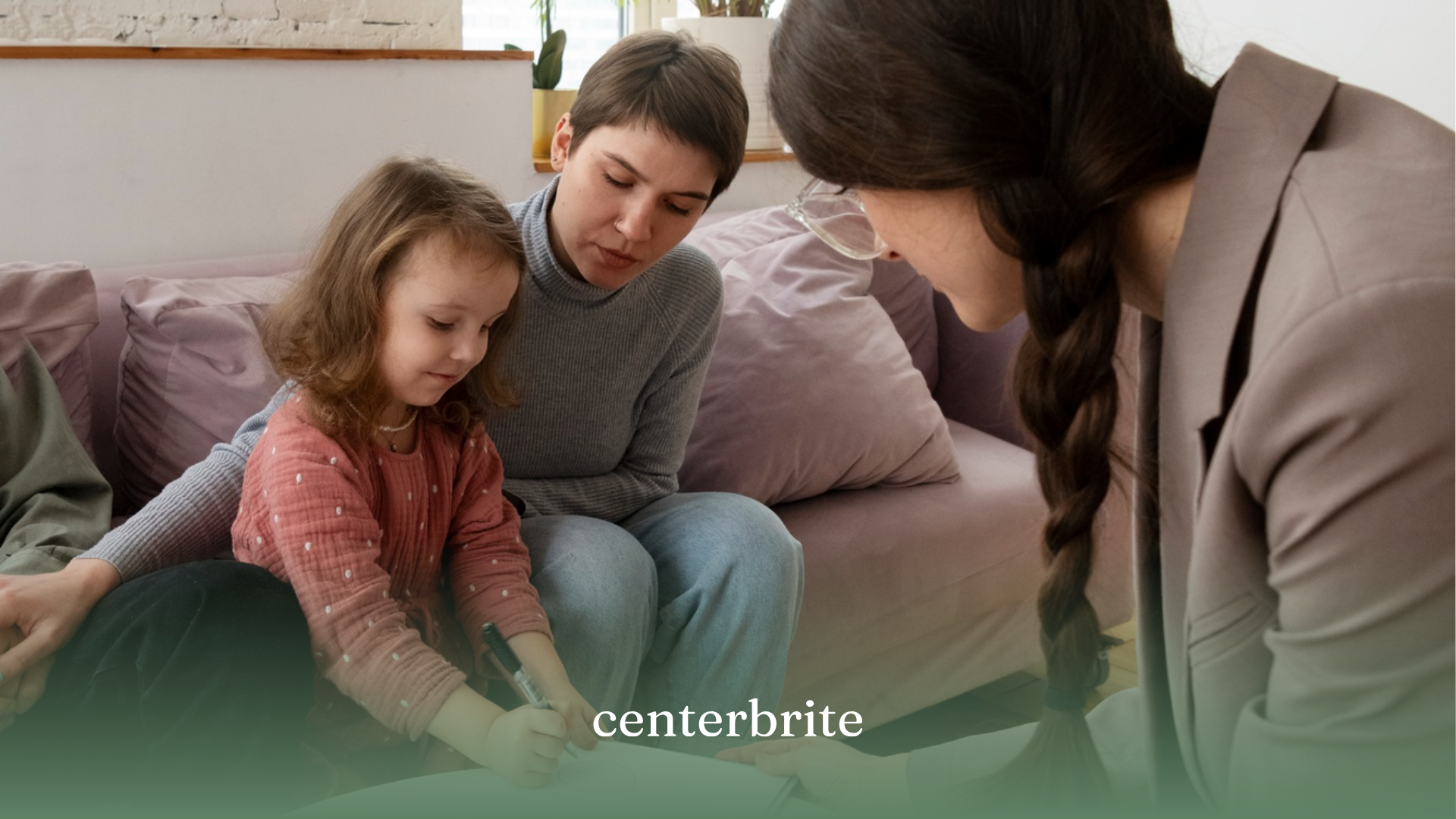
The therapist packs up at 11:30 on a Tuesday. She has just spent two hours on the living room floor with your son, and for most of it he was engaged, talking, handing her things. She says he did great, says see you Thursday, and the door closes.
Then the house goes quiet, and it is just you. You try the thing you watched her do forty minutes ago, the one that looked so easy, and your son walks away. By lunch you are wondering whether the progress is actually his or whether it belongs to her.
I want to be direct about that worry, because it is the one I hear most and it rests on a misunderstanding. Nothing your child learns in a session is meant to stay in that session. The point of the work is that it travels into your Tuesday afternoon, your bath time, your car rides. You are not a backup therapist. You are the main event.
What you'll walk away with
- Home practice matters not because it adds hours, but because a skill has to leave the session to count as learned.
- Reinforcement only works once you know what your specific child is working for, and the answer is rarely stickers.
- Routines you already do, getting dressed, making a snack, walking to the car, teach better than any sit down drill.
- There is a prompting ladder, and the whole goal is to climb down it. The table below lays out every rung.
- Most behaviour that looks like defiance is communication with no easier route available yet.
- Ten focused minutes a day beats a heroic weekend followed by nothing for a fortnight.
Quick Answer: What ABA strategies can parents actually use at home?
The strategies that transfer best are reinforcement built around what genuinely motivates your child, naturalistic teaching woven into routines you already do, visual supports that make the day predictable, single-step instructions with real wait time, a prompting system you deliberately fade, and functional communication so your child has an easier way to ask than melting down. The Centers for Disease Control and Prevention notes that behavioural approaches have the most evidence for treating symptoms of autism, and the parent-delivered versions are among the best studied of all.
Why home practice is the point, not the homework
There is a word for the thing everyone actually cares about: generalization. A skill that only appears with one person, in one room, at one time of day is not a skill yet. It is a performance. Generalization is when your child asks for juice from you, from grandma, at a friend's house, without anyone setting it up.
Sessions build the skill. Home is where it becomes real.
The numbers back that up. A meta-analysis in the Journal of Autism and Developmental Disorders pooled 51 effect sizes and found moderately strong overall benefits of parent-implemented interventions, with a combined effect size of 0.553. The strongest gains were in positive behaviour and social skills, then language and communication, then reductions in challenging behaviour. Notably, the authors found no participant or study characteristic that changed the result, which means these approaches worked across a wide range of families rather than an ideal subset.
The strategies below are also not anyone's opinion. The National Clearinghouse on Autism Evidence and Practice reviewed 972 studies published between 1990 and 2017 and identified 28 evidence-based practices for autistic children and young people. Reinforcement, prompting, visual supports, naturalistic intervention, functional communication training, and parent-implemented intervention are all on that list.
Start with what your child is actually working for
Reinforcement is the engine, and it is the piece parents most often get subtly wrong, usually by reinforcing with what a child should like rather than what that child demonstrably chooses.
Here is the test. Give your child ten minutes of free time with no instructions and watch where they go. Whatever they pick is your real list. It might be one song, a particular texture, spinning the wheels on a truck, being thrown in the air, a specific phrase said in a specific voice. Sticker charts and "good job" are often not on the list at all, and if they are not, using them is just noise.
Three things make reinforcement work:
- Deliver it immediately, within a second or two. A reward at bedtime for something at breakfast teaches nothing.
- Name what earned it. "You asked with words" tells your child what to repeat. "Good boy" does not.
- Protect it. Something available free all day cannot motivate anything. This is not about withholding comfort or affection, just keeping a couple of genuinely special items for teaching moments.
Teach in the routines you already have
The most common mistake I see is a parent setting up a little school at the kitchen table. It is well-intentioned, and it almost never lasts, because it adds an obligation to a day that is already full.
Naturalistic teaching does the opposite. Getting dressed is a sequencing lesson. Making a sandwich is a request opportunity every thirty seconds. The walk to the car is turn-taking. You are not adding a therapy block; you are noticing the teaching moments already buried in your morning.
Easy places to start:
- Put desirable things slightly out of reach. One shelf up. The gap between wanting and getting is where communication happens.
- Give a piece, not the packet. Two crackers instead of the box creates a natural reason to ask again.
- Pause inside a familiar routine. If you always sing the same line going up the stairs, stop halfway and wait. Many children fill the gap.
- Let them lead, then join. Sit down with whatever they chose and build the lesson into that.
Make the day visible
A lot of what reads as resistance is uncertainty about what is coming, and visual supports solve that cheaply.
A visual schedule can be photos on the fridge, drawings on an index card, or objects lined up on the counter. It does not need to be laminated or beautiful. It needs to let your child see the sequence of the afternoon instead of trusting that you will tell them in time.
The simplest version, and the one to start with, is a first and then board. Two pictures. First shoes, then park. First bath, then tablet. It makes the order explicit and the payoff visible, and it turns an argument into a plan. For transitions, pair it with a warning: five minutes, then two, then one, with the visual in hand.
Give one instruction, then actually wait
This costs nothing and changes a surprising amount.
When a child does not respond, most of us repeat ourselves, then rephrase, then add a reason. Within fifteen seconds we have delivered five versions of one request, and the child is processing a wall of language instead of a task.
Instead: one instruction, in as few words as it can be said. "Shoes on." Then stop talking and count silently to ten. Processing time is genuinely longer for many autistic children, and that silence is where the response has room to appear. If nothing happens, move to prompting rather than to more words.
Prompt, then climb down the ladder
Prompting is how you help your child succeed at something they cannot yet do alone. Fading is how you stop that help from becoming permanent. Parents are usually good at the first and understandably nervous about the second, because fading means tolerating a few seconds of struggle.
Prompts sit on a ladder from most support to least, and the job over weeks is to move down it.
| Prompt level | What it looks like | When to use it | How you fade it |
|---|---|---|---|
| Full physical | Hand over hand, you guide the whole movement | A brand new skill, or safety steps | Loosen to the wrist, then forearm, then elbow |
| Partial physical | A light touch at the elbow to start the movement | The child knows the step but stalls at starting | Make the touch briefer and lighter until it is a tap |
| Modelling | You do it first, then they copy | Skills with a clear sequence, like handwashing | Model only the first step, then none |
| Gestural | Pointing, tapping the object, a glance toward it | The child mostly knows, needs a nudge of direction | Make the gesture smaller and further from the object |
| Verbal | Saying the step, or the first sound of a word | Communication targets especially | Shorten to the first syllable, then a pause instead |
| Visual | A picture card or step list stays available | Longer routines done independently with a reference | Often kept permanently, which is fine |
| Independent | No help at all | The goal | Nothing to fade, this is the finish line |
Two rules. Give the least help that still produces success, not the most. And if your child has sat at the same prompt level for two weeks, that is your signal to drop a rung rather than wait longer.
Teach the asking before the behaviour has to do it
Almost every difficult behaviour is doing a job: escaping something hard, getting attention, getting an object, or meeting a sensory need. It persists because it works and because nothing easier exists.
Functional communication training swaps in a route that works better. If your child screams when the tablet is taken, the replacement might be handing you a picture card, signing "more," or saying "my turn." It has to be genuinely easier and faster than screaming, and early on it has to work almost every time, or the old route wins on reliability.
This is the one I would build with your child's BCBA rather than improvise, because getting the function wrong means teaching a replacement for a need your child does not have. But carry the principle with you: before asking how to stop a behaviour, ask what it is currently accomplishing.
What this looked like in one family
Here is a case I think about often. I have blended details across a few families so nobody is identifiable, but the arc is one we see repeatedly.
A three-year-old girl, two months into services, no words yet, and a reliable fifteen-minute scream every time the iPad came away. Her parents had tried a timer, a countdown, and explaining. None of it touched it, and both had started quietly dreading the moment.
We did two things. First, we watched for a week and worked out that the tablet was not the whole story. The same scream happened at bath time and when her brother took a toy. The thread running through all three was losing access to something with no way to protest. Second, we taught one card: a single picture meaning "again," on a lanyard her mum wore so it was never more than an arm's length away.
For two weeks we honoured that card almost every time she used it. That felt excessive to her dad, and he said so. But a replacement has to outperform the old behaviour before anyone switches, and screaming had a flawless track record. Once the card was reliable, we paired it with a first and then board so "again" could sometimes mean "after dinner" rather than "right now."
Eight weeks in, the fifteen-minute screams were down to about a minute of upset, and she was using the card for things nobody had taught her to use it for, including asking her brother to push her on the swing again. That last part is the whole point. We taught one card in one situation, and she took it everywhere.
The things that quietly undo good strategies
- Inconsistency between adults. If the card works for mum and not dad, your child learns the strategy is unreliable rather than learning the strategy.
- Changing the plan after three days. Most of these need two to three weeks before you can judge them, and things sometimes get louder before they get better.
- Running six strategies at once. Pick one, get it steady, add the next.
- Prompting from behind. Guiding your child's hands from behind makes fading hard, because they never see the step being done.
- Only practising when things are calm. Skills need to exist at 5 pm on a bad day, not just on Saturday morning.
How much should you actually do?
Less than you think, more often than you think. Ten to fifteen focused minutes a day, plus catching three or four natural opportunities as they come up, is realistic for most families and beats two intense hours on Sunday, then nothing. Consistency does the work here, not volume.
And one permission slip, because parents need to hear it: you are allowed to just be a parent sometimes. Not every interaction has to be a teaching trial. Children need someone who delights in them more than they need someone always running a programme.
Where to go from here
It all comes down to one idea: the strategies that change a child's life are the ones that happen in their actual life, in your kitchen and your car and at 5 pm on a hard day. Sessions build skills. You are the reason they last.
At Centerbrite, that is deliberately how we work. Our play-based, assent-driven sessions happen in your home rather than a clinic, so strategies are built where you will use them, and parent training and coaching is part of every plan from the start rather than an add-on. That means a BCBA sitting with you, showing you the prompt level your child needs right now and adjusting it as they progress. We provide in-home ABA therapy in New Jersey and Virginia.
If you have been watching sessions and wondering how to carry any of it into the rest of the week, that is exactly the conversation to have. Contact us today, and we will talk through where to start.
Frequently Asked Questions
1. Do I need training to use these strategies at home?
You can start the basics today, particularly reinforcement, wait time and first and then boards. For anything involving challenging behaviour, work with your child's BCBA first, because the right response depends on what the behaviour is achieving, and that needs assessing rather than guessing.
2. What if a strategy makes the behaviour worse at first?
That is common enough to have a name. When a behaviour that used to work stops working, it often gets louder before it fades. It usually settles within one to two weeks of consistency, but tell your BCBA so they can confirm the plan and adjust the pace.
3. My partner and I handle things differently. Does that matter?
More than almost anything else on this page. Children are excellent at working out which adult produces which outcome. Pick two or three strategies you will both genuinely do the same way and let the rest go for now.
4. Will using rewards mean my child only performs for a prize?
Not if you fade them. Reinforcement is dense at the start and thins out as the skill becomes automatic, the way you would stop praising an adult for tying their shoes. Ask your BCBA to show you the fading schedule, because it is part of the plan rather than an afterthought.
5. My child does things for the therapist but not for me. What am I doing wrong?
Almost certainly nothing. The therapist has spent weeks becoming associated with good things, and she knows the exact prompt level your child needs today. Ask to be coached live during a session rather than briefed afterwards. Being guided through it while your child is right there is far more useful than watching.
Sources:
- https://www.cdc.gov/autism/treatment/index.html
- https://ncaep.fpg.unc.edu/wp-content/uploads/EBP-Executive-Summary_Accessible.pdf
- https://scholarsarchive.byu.edu/facpub/7510
- https://unsplash.com/photos/family-building-with-colorful-toy-blocks-together-on-floor-T6pS-Dr8ams