I hear a version of this question almost every month, usually phrased with a little embarrassment, as though it might be a silly thing to ask:
"He'll watch the same forty seconds of a YouTube video a hundred times, and he knows every word of it. But when I stand at the sink and show him how to wash his hands, he looks straight past me. Is there any way to use the video thing?"
There is. It is called video modeling; it has been studied for about forty years, and it may already be sitting in your child's treatment plan under a heading you skimmed past. The honest answer to that question is yes, mostly, with some caveats I would want you to hear before you start filming.
Five Things Worth Knowing Before You Read On
- It is not screen time with a nicer label. The clip is maybe ten percent of the intervention. The rest is the structure around it.
- There are four kinds, not one. Which one your child's team picks depends on the skill, and the reasoning behind that choice is worth understanding.
- The evidence is unusually good. This is one of the more heavily researched teaching strategies in the whole field, across every age group from toddlers up.
- The skills tend to travel. That is the part I find genuinely remarkable, and it's what most parents care about most.
- It fails in predictable ways. Scripting, prompt dependence, and generalization that never happens. All avoidable, none automatic.
Quick Answer: What Is Video Modeling in ABA Therapy?
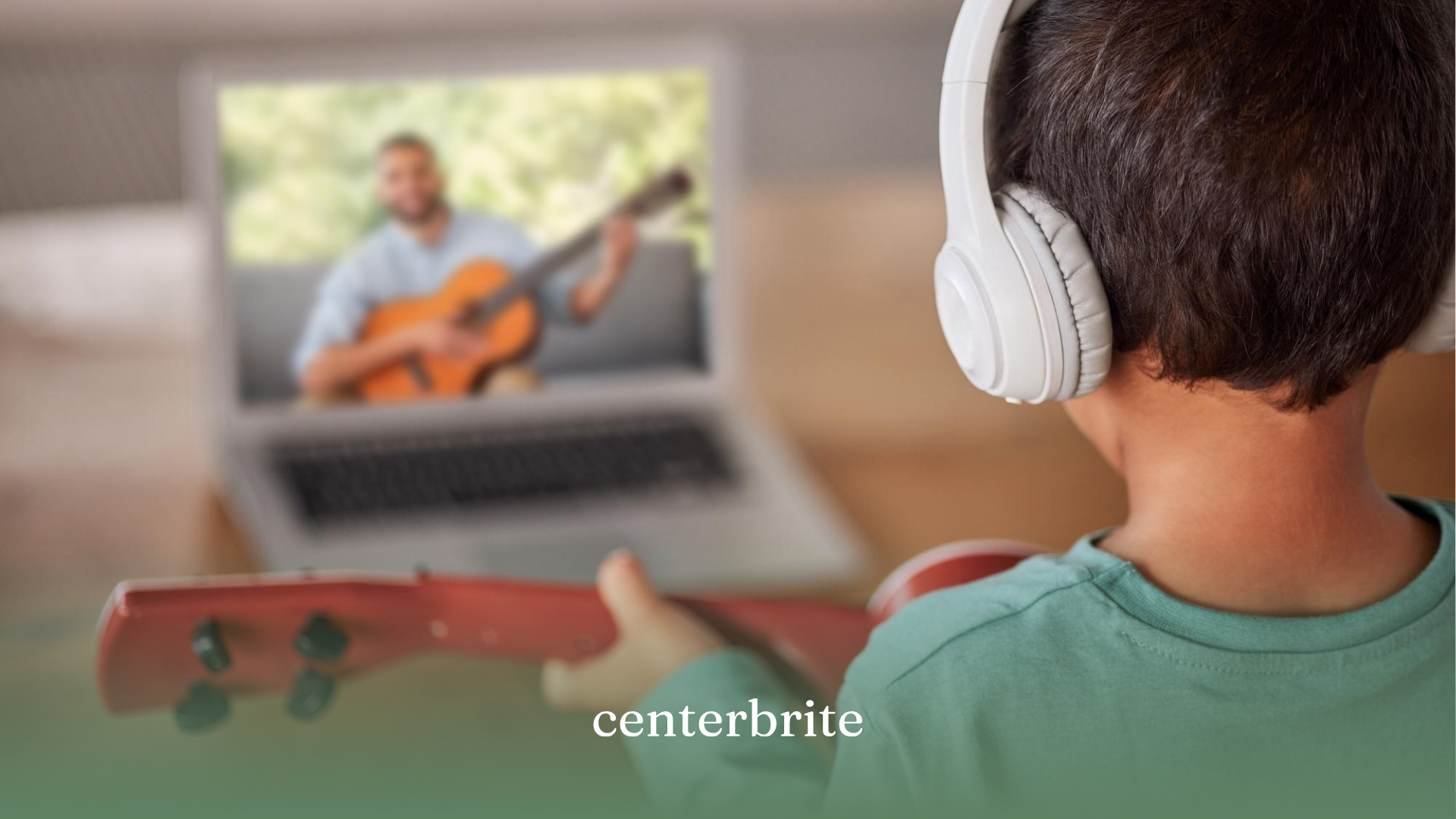
Video modeling is a teaching strategy in which a child watches a short recording of a skill performed correctly from beginning to end, then immediately gets a chance to do it themselves. The person in the video might be an adult, a peer, a sibling, or the child. Behavior analysts use it inside sessions to teach play, communication, social, and daily living skills, and it works by leaning on something many autistic children are already very good at, which is learning from what they watch.
Why a Screen Gets Through When a Person Does Not
Think about what you are actually asking of a child when you stand next to them and demonstrate something. Watch me. Ignore the dog, the TV, your sister. Tolerate the fact that I am looking back at you and waiting. Hold six steps in your head in the right order. Now do them. That is an enormous request, and any one of those demands can be where the whole thing collapses.
A video strips most of it away. The camera frame does the filtering, so the only thing on screen is the thing that matters. Nobody is looking back. Nobody is waiting. And the clip is identical on the fortieth viewing as it was on the first, which is something no human being can promise, least of all a parent at 7:40 in the morning. Researchers put it more formally: video-based instruction supports learners who find complex imitation difficult, and it pairs teaching with an activity most children already like.
One practical bonus: portability. The same forty seconds that plays in a Tuesday session plays Saturday before soccer, in the car, at grandma's house in Ridgewood. Skills need repetition in different places to stick, and a video is the cheapest way I know to get it.
The Four Kinds You Will Actually Encounter
People say "video modeling" as though it were one procedure. It is a family. A Campbell Collaboration evidence map that catalogued 438 studies in this area found that 273 evaluated basic video modeling, 82 evaluated video self-modeling, 61 evaluated point-of-view modeling, and 57 evaluated video prompting. Those four are what you will hear about.
| Type | What the child watches | Best suited for | Example |
|---|---|---|---|
| Basic video modeling | Someone else, usually an adult or a peer, doing the whole skill start to finish | New social and play skills, where watching another person is the whole point | A child walking up to a group and asking to join the game |
| Video self-modeling | Themselves doing the skill successfully, edited together from their own best attempts | Building fluency and confidence with something already half there | A clip of your own child greeting a classmate, cut so only the good takes remain |
| Point-of-view modeling | The skill shot from the child's own visual perspective, so they mostly see hands | Fine-motor and self-care routines where watching an adult from behind is confusing | Hands tying a shoelace, filmed from directly above |
| Video prompting | One step at a time, pausing after each so the child does that step before the next plays | Long routines that overwhelm a child when shown as a single block | Laundry, split into sorting, loading, adding detergent, starting the machine |
The choice is not arbitrary, and if you ask your BCBA why they picked one, you should get a real answer. Point-of-view usually comes out when a child keeps mirroring an adult's movements backwards. Video prompting is for the child who nails the first two steps and drifts off around step four. Self-modeling tends to come later, once there is footage of success worth playing back.
What the Research Says, and What It Does Not
I am wary of posts that wave vaguely at "studies show," so here is the specific picture.
Video modeling meets the criteria for an evidence-based practice under the 2020 systematic review by the National Clearinghouse on Autism Evidence and Practice, supported by 95 single-case design studies and 2 group design studies, with demonstrated effects across every age band from early intervention through young adulthood. The full practice brief is published by the AFIRM team at the University of North Carolina, and it is free to read.
The finding I care about most is not that children learn the skill. Lots of things teach a skill inside a session. The question is whether it survives the drive home. A widely cited meta-analysis of 23 single-subject studies concluded that video modeling and video self-modeling promote skill acquisition, and that the skills acquired are maintained over time and transferred across people and settings. That last clause is the one worth rereading.
The Association for Science in Autism Treatment, refreshingly blunt about which autism treatments hold up and which do not, summarizes it as effective for social skills, play skills, daily living skills, academic skills, and language and communication skills.
None of which means video modeling beats other strategies, works for every child, or replaces therapy. It is one tool inside a program, picked for particular goals and quietly dropped when it stops earning its keep.
How a Video Model Actually Gets Built
The clip is the visible part. Almost everything that determines whether it works happens around it.
The skill gets chosen and taken apart.
A BCBA picks a target that genuinely matters to the family, then writes a task analysis: the exact steps, in order, at the right size for that child. Too coarse and the video teaches nothing. Too fine and it runs five minutes, and you have lost them. Before any filming, somebody also measures what the child can already do alone. Skip that baseline, and you will never know whether the video helped or your child simply grew into the skill on their own schedule.
The filming is a clinical decision, not a production one.
Who models, what angle, how fast, narration or silence, whether the setting matches your actual bathroom. Phone footage is fine, and often better, because it shows the real sink with the real soap dispenser your child has to use.
Watching is followed immediately by doing.
Clip ends, opportunity is right there. Correct steps get reinforced, errors get a prompt and another go. This is what makes it applied behavior analysis rather than media consumption, and it is the part that gets skipped most often. Our approach page lays out how a full session is structured around this.
Data gets taken every time.
Which steps were independent, which needed help, what kind of help. That record is the only thing that can tell your team to keep going, change the video, or abandon the idea.
Prompts are faded on purpose.
The goal is a child who washes their hands, not a child who needs an iPad to wash their hands. Fading belongs in the plan from day one, not improvised in month four when the video has become a crutch.
What We Have Seen in Our Own Sessions
Let me give you a concrete one. Call him Eli. He is six, he lives in Essex County, and hand washing had become the daily flashpoint. He would turn on the water, wet his hands, and stop. Soap simply did not enter the picture. His mom had tried hand-over-hand, a laminated picture strip taped above the mirror, and a song she now says she hears in her sleep.
His therapist filmed a point-of-view clip on a phone. Forty seconds, shot in Eli's own bathroom, his own soap dispenser in frame, seven steps in the task analysis, and no narration at all, because language was competing for his attention rather than helping it.
The first week, nothing visible changed. He watched happily, walked to the sink, wet his hands, stopped. The second week, he reached for the soap without anybody asking, and his mother texted his BCBA from the hallway. By the end of the month, he was independent on the first five steps, still needed a gesture for scrubbing between his fingers, and had started doing the whole routine at his grandmother's house, which nobody had taught him to do.
Eli is a composite rather than one specific child, but that arc is one our clinicians have watched repeatedly: a plateau that felt permanent, a short clip filmed in the room where the skill actually lives, then progress turning up somewhere nobody was working on. One unglamorous detail I insist on including is that the video got reshot twice, because the first version was filmed at the wrong height and he could not see the faucet. Getting the angle wrong on the first try is normal, not a failure of the method.
Where I Would Tell You to Be Careful
Any honest account has to include the limits, and the people who study this are candid about them.
- Generalization has to be engineered. Skills learned in front of a screen do not show up in the world by themselves. Extensions of the instruction have to be planned and generalization addressed directly, which is a large part of why teaching inside a child's actual home matters so much.
- Scripting is a real risk. Some children start reciting the video instead of performing the skill, or attend so hard to the clip that watching becomes the activity. A good team watches for this rather than discovering it six weeks later.
- Prompt dependence creeps in quietly. A child can learn to need the video. Fading is the answer, and it has to be deliberate.
- It costs real time, and it does not suit everyone. Filming and editing take hours somebody has to protect, and responsibility falls through the cracks between the BCBA, the RBT, and the family unless one person is clearly assigned. A child who does not attend to screens, or whose goal has no watchable sequence, is better served by a different approach.
If You Want to Try One at Home
You can do this, and the bar is lower than people assume. A phone is enough. Pick one skill, not five. Film it in the room where it actually happens, with your own objects. Keep it under a minute, in one straight take with no cuts, so the sequence stays legible. Play it right before the natural opportunity, then let your child try and reinforce whatever they get right, even if that is only step one.
Then show it to your child's behavior analyst before you build a routine around it. Thirty seconds of their attention can save you a month of a clip that was quietly teaching the wrong thing, usually a sequencing error you would never spot yourself. Parent training is built into the programs we run precisely for this, and our FAQ covers how the BCBA and RBT roles divide up day to day.
Bringing It Into Your Own Week
Video modeling works because it plays to a real strength, turning an abstract instruction into something concrete a child can watch as many times as they need. The research behind it is solid; it stretches across play, communication, social, and self-care goals, and it is simple enough that families can carry it into the hours no therapist ever sees. It also has genuine limits, and whether it becomes a useful tool or an expensive crutch comes down almost entirely to how carefully the program around it is built.
Centerbrite provides quality
and has been working with families in New Jersey, across Bergen, Essex, and Morris counties. Our BCBAs design individualized programs for autistic children in the rooms where their lives actually happen, choosing strategies like video modeling when they fit the child in front of us and setting them aside when they do not. Every plan includes parent training, so what happens in a session becomes something you can use on a Saturday morning. If you would like to talk through whether this might help your child, contact us today!
Frequently Asked Questions
1. Is video modeling just letting my child watch videos?
No, and the difference is entirely in what happens after the clip ends. A therapist has picked a specific target, broken it into steps, and arranged an immediate chance to practice with reinforcement and data collection behind it. Strip that away, and yes, it is just screen time.
2. How young can we start?
The evidence covers learners from early intervention through young adulthood, including children under three. Age matters less than whether your child attends to video and can imitate at some level.
3. Does this mean more screen time overall?
Usually less. The clips are short, often under a minute, with a defined job and a defined stopping point rather than running open-ended.
4. Can we just keep using the video if it works?
Fading is the goal, because a skill that only appears when the iPad appears is not really independent yet. Your child's plan should say how support gets reduced over time, and you are entitled to ask what that looks like.
Sources:
- https://asatonline.org/for-parents/learn-more-about-specific-treatments/applied-behavior-analysis-aba/aba-techniques/video-modeling/
- https://afirm.fpg.unc.edu/resource/video-modeling-brief-packet/
- https://journals.sagepub.com/doi/10.1177/001440290707300301
- https://journals.sagepub.com/doi/10.1002/cl2.1405
- https://pubs.asha.org/doi/10.1044/2024_AJSLP-23-00479