I get some version of the same question almost every week. A parent will say, "My son is so smart, so curious about how things work. Why is it so hard for him to play with another kid for more than two minutes before he wanders off?" It's one of the most common things I hear in this line of work, and it's rarely really about the two minutes. It's about the birthday party invitation that didn't come this year. It's about recess spent alone by the fence while other kids form a kickball game. It's about wondering what happens once school gets harder and friendships get more complicated than sharing a swing.
Social skills are often the part of an autism diagnosis that sits heaviest with parents, sometimes even more than speech delays or repetitive behaviors, because connecting with other people is something almost every parent hopes for their child.
Here's the part that helps: social skills are teachable. They aren't a fixed trait a child either has or doesn't have. Applied Behavior Analysis (ABA) has spent decades building a body of research and a genuinely practical toolkit around exactly this problem, breaking social interaction down into pieces a child can actually learn, one at a time, in a way that holds up outside the therapy room.
How Does ABA Therapy Improve Social Skills?
ABA therapy improves social skills by breaking interactions like eye contact, turn-taking, and starting a conversation into small, teachable steps, then practicing them through play, modeling, and everyday routines until they start to feel natural. A Board Certified Behavior Analyst (BCBA) designs an individualized plan based on exactly where a child is starting from, and progress is tracked with real data instead of guesswork. The goal isn't to make a child act "normal." It's to give them tools to connect with people in a way that works for them.
What "Social Skills" Actually Means for an Autistic Child
"Social skills" sounds like one broad thing, but it's really a stack of smaller, specific abilities, and most autistic children are strong in some and still building others.
A few of the building blocks a therapist might target:
- Joint attention. Noticing what someone else is looking at or pointing to, and sharing that focus together. This is often one of the very first social skills taught, because so much later communication builds on it.
- Turn-taking. Waiting through someone else's turn in a game, a conversation, or even a simple back-and-forth like rolling a ball.
- Initiating. Starting an interaction instead of only responding to one, like walking up to a group and asking to join.
- Reading social cues. Picking up on tone of voice, facial expression, or body language that signals how someone is feeling.
- Flexibility. Adjusting when a game doesn't go the way it was "supposed to," or when a friend wants to play something different.
- Unwritten social rules. The things most kids absorb without ever being told directly, like not opening someone else's birthday presents or knowing when a joke is a joke and not a literal statement.
None of these are talents a child has to be born with. Each one can be named, modeled, and practiced, which is exactly where ABA comes in.
Why These Skills Don't Always Develop on Their Own
Most children pick up social rules the way they pick up an accent: by absorbing thousands of small, casual moments of watching other people, without anyone sitting them down to explain it. For a lot of autistic children, that incidental learning doesn't happen automatically. The rules that other kids seem to catch by osmosis often need to be taught directly and explicitly.
This isn't a small or cosmetic gap. The Centers for Disease Control and Prevention notes that social-relational approaches, which focus on improving social skills and building emotional bonds, are one of the recognized categories of autism treatment precisely because these skills matter so much for a person's day-to-day functioning and long-term wellbeing. Left unaddressed, social difficulties in childhood tend to persist rather than resolve on their own, which is part of why early, direct instruction makes such a difference.
How ABA Actually Teaches Social Skills
This is the part parents are usually most curious about: what does teaching a social skill actually look like, mechanically? ABA doesn't rely on one single method. It draws from a handful of well-studied techniques, usually blended depending on the child and the skill.
- Discrete Trial Training (DTT) breaks a skill into its smallest parts and practices it in short, structured repetitions with clear reinforcement for the desired response. It's especially useful for skills a child hasn't shown much of yet, like a scripted greeting or making eye contact on request.
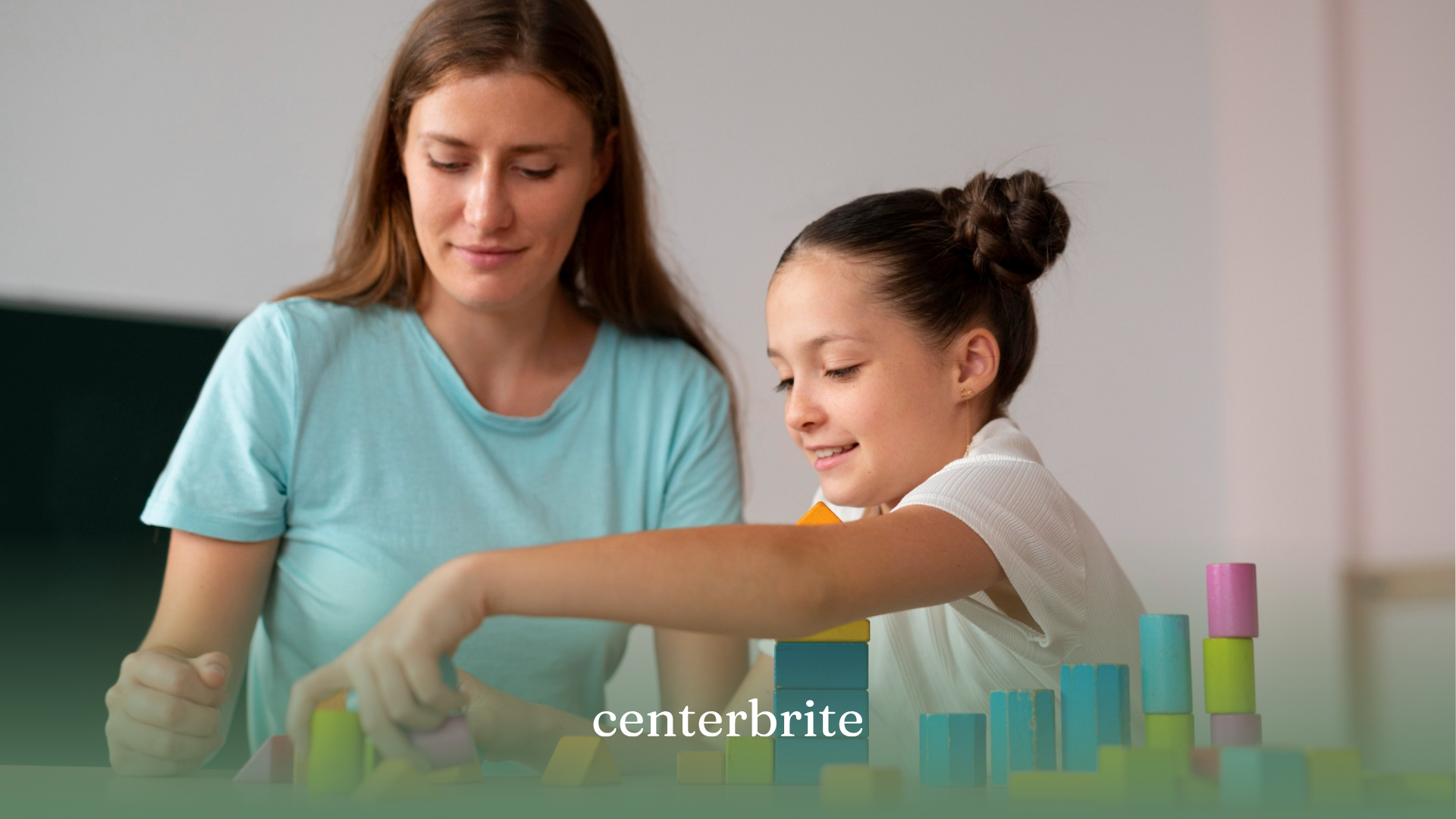
- Naturalistic teaching takes the opposite approach: instead of a structured drill, the therapist builds instruction into whatever the child is already doing. If a child reaches for a toy another kid is holding, that's the moment to prompt asking for a turn instead of grabbing. Because the teaching happens in the exact context where the skill is needed, it tends to generalize faster and feel less like a lesson. This is also the foundation of how our therapy sessions are structured: play-led, with goals woven into whatever a child is naturally motivated by that day, rather than delivered at a desk.
- Modeling and video modeling show the child what the skill looks like before asking them to try it themselves, whether that's a therapist demonstrating how to ask to join a game or a short video clip a visual learner can watch on repeat.
- Social narratives are short, personalized stories that walk through a specific situation and what to do in it, which helps a child anticipate a tricky moment (a fire drill, a new babysitter, a friend saying no) before it happens.
- Peer-mediated instruction brings other children into the process directly, coaching a sibling or classmate to prompt and reinforce social behavior. Practicing with real kids, not just adults, is often what makes a skill finally click in a way that transfers to the playground.
A 2025 narrative review in the peer-reviewed journal Translational Pediatrics looked at intervention methods for social skills in children and adolescents with autism and found that approaches rooted in naturalistic intervention have some of the strongest research support of any category studied, specifically because they build motivation and engagement into real contexts rather than isolated drills. Autism New Jersey's own review of the evidence places social skills training, peer-based instruction, naturalistic intervention, and modeling in its highest evidence tier as well.
Here's how the core techniques compare at a glance:
| Technique | What It Looks Like in a Session | Skills It Targets |
|---|---|---|
| Discrete Trial Training (DTT) | The therapist breaks a skill into small steps and practices it in short, structured trials with immediate reinforcement. | Foundational skills a child hasn't shown yet, like a scripted greeting or eye contact |
| Naturalistic Teaching | Skills are taught inside real play, prompting a request for a turn right as the moment naturally comes up. | Turn-taking, initiating, and skills that need to work in the moment, not just on cue |
| Modeling & Video Modeling | The therapist, or a short video, demonstrates the skill first, then the child imitates it. | Skills a child learns well by watching, like how to ask to join a group |
| Social Narratives | A short, personalized story walks through a specific situation and what to do in it. | Understanding unwritten social rules and preparing for new or unpredictable moments |
| Peer-Mediated Instruction | A sibling, classmate, or peer is coached to prompt and reinforce social behavior directly. | Practicing skills with real kids so they generalize beyond the therapy room |
What This Looks Like in a Real Session
In our sessions, we worked with a boy we'll call Diego, five years old, who loved puzzles but would sweep the pieces off the table the moment another child tried to help. His parents had all but stopped inviting other kids over, because the meltdowns felt inevitable.
His therapist didn't start with a lecture about sharing. She started with a puzzle Diego already loved, and a peer he already liked being near, and built in one small ask: "Your turn, then Diego's turn," repeated calmly, with a visual timer and a genuinely fun payoff each time he waited. The first few sessions, waiting even five seconds was worth celebrating. Within a few weeks, five seconds became thirty. By the end of the program, Diego was the one reminding his cousin, "Your turn now," at a real family puzzle night, not a therapy session.
Diego isn't one specific child. He's a composite drawn from a pattern we see often: a skill that looks impossible in the moment becomes automatic once it's broken into steps small enough to actually practice and reinforce.
Making Sure Skills Transfer Beyond the Therapy Room
A social skill that only shows up with one therapist, in one room, isn't finished yet. Generalization, making sure a skill holds up at home, at school, and on the playground, is treated as a core part of the plan from day one, not an afterthought.
That's part of why parent involvement matters so much. You are the person who's actually there during the moments that count: at the dinner table, in the car, at a cousin's birthday party. A BCBA doesn't just work with your child; they work with you on translating the exact strategies your child's therapist uses into your family's daily routines, so a skill practiced on a Tuesday afternoon is still there on a Saturday at the park.
Progress isn't tracked by gut feeling either. Every session includes objective data collection on the specific goals in a child's program, reviewed and adjusted by the BCBA on an ongoing basis, so the plan keeps pace with what's actually working rather than staying on autopilot.
Is ABA Trying to Make My Child Act "Normal"?
This question deserves a direct answer, because it's a real and understandable worry. Older, outdated versions of ABA sometimes did focus on compliance for its own sake, and that history is worth taking seriously.
Modern ABA, including the kind we practice, is built differently. The goal was never to erase who a child is or to make an autistic child appear neurotypical. It's to widen the toolkit a child has for getting their needs met and connecting with people on their own terms, whether that looks like a full back-and-forth conversation or a quieter, more low-key kind of friendship. Sessions are assent-based, meaning a child's willingness to engage drives the pace, and their signals that they need a break are respected rather than pushed through.
If your child stands at the edge of the playground wanting to join in but not quite sure how, that's not a life sentence; it's a starting point. Applied Behavior Analysis breaks the invisible rules of social connection into pieces a child can actually practice, from a first shared glance to a real, ongoing friendship, and builds them back up in a way that's paced by your child, not against them.
That's the work we do every day at Centerbrite. Our BCBAs and therapists build individualized ABA programs for children across Bergen, Essex, and Morris counties in New Jersey, with social connection woven into goals alongside communication, independence, and daily routines, right in the home and community settings where those skills actually need to work. If you're wondering whether this kind of support could help your child, we'd love to talk. Get started today, and let's figure out together what your child's next small step could look like.
Frequently Asked Questions
1. At what age should ABA therapy for social skills start?
There's no single right age. Early intervention, often beginning before age 5, tends to produce the strongest long-term outcomes because foundational skills like joint attention and imitation build everything that comes after. That said, meaningful progress on social skills is possible well beyond the preschool years too.
2. Can older children and teens still benefit from social skills work in ABA?
Yes. Younger children often start with foundational pieces like joint attention and turn-taking, while older kids and teens tend to work on more complex targets: holding a two-way conversation, reading sarcasm, navigating group dynamics, or handling disagreements with a friend.
3. Will my child actually use these skills outside of therapy, like at school or the playground?
That's the explicit goal, not a hoped-for side effect. Skills are practiced in natural settings whenever possible, and generalization to home, school, and community environments is built into the plan from the start, with families and caregivers reinforcing the same strategies outside of sessions.
4. Is ABA therapy trying to make my autistic child act "normal"?
No. The ABA practiced today focuses on skills that matter to your child and your family, like communication, independence, and genuine connection, not on compliance or masking who a child actually is. Modern ABA is assent-based, meaning your child's engagement and comfort drive the pace of every session.
5. How is progress on social skills actually measured?
Through direct, objective data collected during every session on the specific goals in your child's program, not general impressions. A BCBA reviews that data regularly and adjusts the plan as needed, so you can see concretely what's improving and what still needs attention.
Sources:
- https://www.cdc.gov/autism/treatment/index.html
- https://tp.amegroups.org/article/view/143663/html
- https://autismnj.org/about-autism/treatment/
- https://www.autismspeaks.org/social-skills-and-autism
- https://gsep.pepperdine.edu/blog/posts/aba-techniques-strategies-for-behavior-analysts.htm