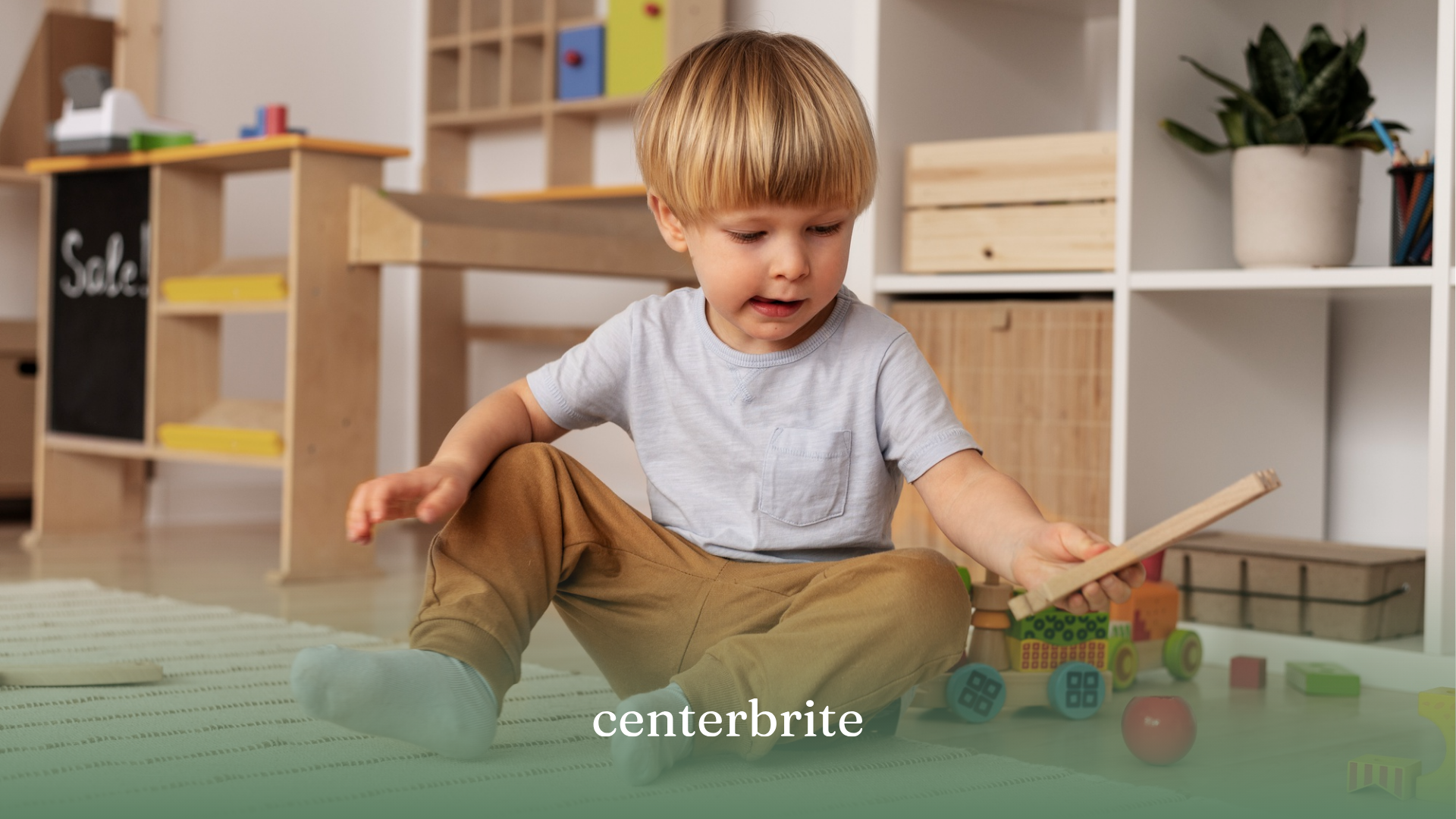
Your son has the cars out again. All of them, in a line, sorted by colour, running the length of the hallway. Twenty minutes in and he is completely absorbed. Not crashing them, not making engine noises, not driving one to a pretend garage. Just lining them up, then adjusting the line.
Somewhere along the way somebody has probably told you this does not count, that real play is imaginative and social, and you should be redirecting him toward something more useful.
I want to disagree with that, because it is both wrong and counterproductive. What your son is doing is play. It is also information: he sorts, sequences, notices small differences, and can hold attention on something he chose for twenty minutes. Those are the raw materials. The work is not replacing his line of cars; it is getting yourself into it and then widening what the two of you do together.
If you only read this far...
- Lining up, spinning, and sorting are real play, and they tell you what your child's current strengths are.
- Play is how most other skills get built, which is why it is treated as the vehicle rather than the reward.
- Symbolic play tends to be reduced and more repetitive in autistic children, not absent, and the gap narrows sharply when an adult models.
- There are two separate ladders, one for how play works and one for how social it is, and children climb them at different rates.
- Joint attention, the act of sharing a moment with you, is the hinge most other play skills swing on, and it is teachable.
- The aim is a wider repertoire and more shared enjoyment, never a child who plays in a way that looks more typical.
Quick Answer: How do play skills develop in autistic children?
Play develops along a predictable sequence, from exploring objects with the senses, to using them as intended, to building and combining them, to pretending, to games with rules. Autistic children move through the same sequence, but often at a different pace and with a strong preference for the earlier, more predictable stages. Research consistently finds symbolic or pretend play to be less frequent and less complex rather than missing, and the difference is largest in free play and much smaller when an adult models first. That last finding is the practical one: modelling inside the play your child already chose is the most reliable way in.
Play is the vehicle, not the reward
This matters because it changes where play sits in the day. It is not what happens once the work is done. It is the work.
The American Academy of Pediatrics put its weight behind this in a clinical report in Pediatrics, stating plainly that "play and learning are inextricably linked" and that play "enhances brain structure and function and promotes executive function." The report ties play to language growth, self-regulation, and social skill, and it is specific about the adult's role: scaffolding is part of guided play, and caregivers are needed to provide the right amount of input and guidance.
That phrase, the right amount, is the whole skill. Too little and you are a spectator; too much and you have taken over the game, which is how most well-intentioned play sessions fall apart.
What play tends to look like, and why that is useful rather than alarming
Here the research is more nuanced than the popular summary, and the nuance is genuinely encouraging.
A scoping review in the journal Children pulled together 22 studies on symbolic play in autistic children. Its conclusion was that symbolic play is less frequent, less complex, and more repetitive rather than absent. Two of its other findings matter more for your Tuesday afternoon. First, the difference between autistic children and their peers was largest in free, spontaneous play. Second, in modelled or imitative play, those difficulties shrank or disappeared, with several studies finding no group difference on simple imitation tasks.
That is the most actionable finding in this post. The gap is a spontaneity gap far more than a capability gap: your child may never independently invent the idea of feeding a toy dinosaur, and may do it readily after watching you do it twice.
It reframes repetitive play too. Lining up cars is ordering and classifying. Spinning wheels is studying cause and effect. Repeating a sequence is rehearsal, which is how anybody gets fluent at anything. None of it needs confiscating. It needs a second player.
The first ladder: how play itself develops
Play broadly moves through the stages below. Children do not march through them cleanly, and most children do several at once, so treat this as a map rather than a schedule.
| Stage of play | What it looks like | What to model next |
|---|---|---|
| Sensory and exploratory | Mouthing, banging, spinning, dropping, lining up, sorting by colour or size | Copy it, then add one small variation to the same object |
| Functional | Using an object the way it is designed, rolling the car, stacking the cup | Add a second step, so the car rolls and then parks |
| Constructive | Building, assembling, making something that holds together | Build alongside, then ask for one piece to be added to yours |
| Symbolic and pretend | A block becomes a phone, a doll gets fed, a scenario plays out | Model the substitution yourself first, briefly, with no pressure to copy |
| Games with rules | Turn-taking, simple board games, hide-and-seek, winning and losing | Keep rounds very short at first and make losing survivable |
The rule is to model one step above where your child is comfortable, not three. A child happily lining up cars is not ready to run a pretend car wash with assigned roles. They may well be ready to watch you drive one car along the line and park it.
The second ladder: how social play develops
Social participation is a separate track, and conflating the two causes unnecessary worry. The classic description comes from Mildred Parten's 1932 research, which set out a progression from solitary play, through onlooker and parallel play, to associative and then cooperative play. Parallel play, playing contentedly alongside another child without much interaction, is a necessary stage rather than a failure to play together. Plenty of autistic children stay there longer, and that time is productive rather than wasted. The target after it is not instant cooperation but associative play: same materials, some sharing, no requirement to coordinate a shared goal.
Joint attention is the hinge
If one skill is worth prioritising, it is this. Joint attention is the ordinary act of sharing attention on something with another person: your child looks at the toy, then at you, then back at the toy, checking you are in it with them. Almost everything else runs through it, because learning by watching, following a point and picking up a word for an object someone is showing you all depend on that triangle of child, object and person.
It is also teachable, and there is trial evidence for that. A randomized controlled study by Kasari, Freeman, and Paparella, published in the Journal of Child Psychology and Psychiatry in 2006, assigned 58 three- and four-year-old autistic children to a joint attention intervention, a symbolic play intervention, or a control group, all while attending ABA classrooms. Children in the joint attention group improved in joint attention, and those in the play group improved in symbolic play, while the control group improved in neither. Notably, both intervention groups carried some of their gains over into interactions with their own caregivers, even though the caregivers had not been taught to target those skills.
Two things follow. These skills respond to being taught directly rather than only hoped for, and what gets built in sessions does travel home.
How to get into the play without taking it over
This is the part parents ask for most, so here it is as a sequence.
- Get low and say nothing. Sit at your child's level, within arm's reach, and be present for a minute or two. No instructions, no questions. You are asking permission without words.
- Copy before you add. Line a car up at the end of their line. Imitation is the cheapest entry ticket there is, because it signals you are joining rather than redirecting.
- Then offer one small variation. One. Drive your car along their line. Put a block on their tower. If they reject it, drop it and go back to copying. Rejection is information, not failure.
- Become useful. Hold the box. Be the one with the piece they need. A helpful presence in their game builds more connection than running your own activity alongside it.
- Protect their version. Preferred play is not a problem behaviour. If your arrival always means the cars get rearranged into your better game, your child learns that you cost them something.
Most of this fits inside what you are already doing. Bath time is cause and effect and turn-taking. Unloading shopping is sorting and labelling. Cooking is sequencing. You are not adding a play session; you are noticing where play already is.
What this looked like in one family
In our sessions we have seen this pattern repeatedly, and the example below blends details from several families so that no one is identifiable.
A four-year-old boy spent most of his free time lining up one set of toy animals. A relative had told his parents to pack the animals away so he would be forced to play properly. They tried it for a fortnight. He did not start pretending. He got distressed, then found something else to line up.
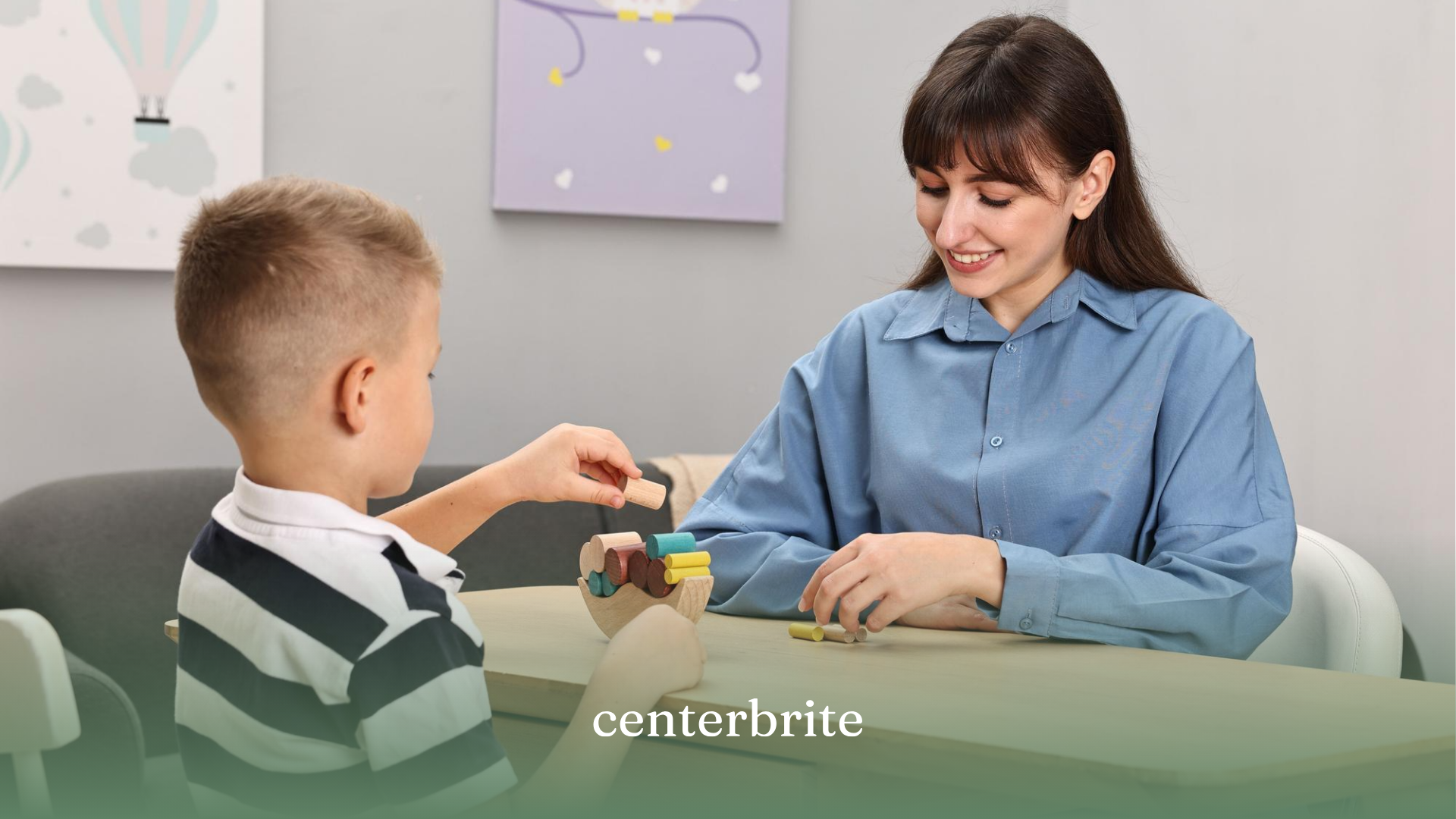
We put the animals back. For two sessions the therapist did nothing but sit beside him and line animals up too, at the end of his row, in his order. In the third, she began placing one animal slightly out of line, which he moved back, which became a game of its own and the first thing they had done together on purpose.
From there it moved quickly. She started walking an animal along the row with footstep noises. He watched for about a week, then did it himself. By week six, the animals were walking to a bowl to be fed, which is squarely symbolic play. He still lined them up first every time, and we never asked him to stop.
The detail his mother mentions when she tells this story is not the pretending. It is that he started bringing her an animal when she walked into the room.
What tends to backfire
- Removing the preferred toy to force new play. It usually produces distress and a new repetitive interest rather than imagination.
- Asking a stream of questions. "What colour is that? What are you doing? Can you say car?" converts play into assessment, and most children leave.
- Modelling too far ahead. A full pretend scenario offered to a child at the functional stage reads as noise.
- Measuring success by how typical it looks. The goals worth having are a wider range of play and more enjoyment shared with other people.
Where to go from here
Your child is already playing. The lines of cars, the sorting, the sequence repeated forty times: that is where their attention and strengths already live, and it is the sensible place to start rather than the thing to clear away. The work is joining it, modelling one step beyond it, and letting shared enjoyment do the rest.
At Centerbrite, that is deliberately how our sessions run. Our therapists start with whatever your child is motivated by that day and build goals into it, which means play-based and assent-driven sessions rather than drills at a table, and a plan that targets joint attention and play directly rather than waiting for them to appear. Because we work in your home, the play we build on is the play you already have, and parent training and coaching is in every plan so you know what to model next. We provide in-home ABA therapy across New Jersey and Virginia.
If you have been watching your child play and wondering how to get into it with them, that is exactly where we would start. Contact us today, and we will talk about what the next rung looks like for your child.
Frequently Asked Questions
1. Should I stop my child lining things up or spinning toys?
No. It is genuine play and often a strength worth building on. The exception is where it is causing harm or crowding out everything else, which is worth raising with your child's BCBA, and even then the plan should be to expand the repertoire rather than remove the activity.
2. My child only plays alone. Should I be worried?
Not in itself. Solitary and parallel play are legitimate stages every child passes through, and many autistic children stay in them longer. A useful next step is parallel play with one tolerant sibling or peer and a shared pile of materials, rather than pushing straight for cooperative games.
3. Can pretend play actually be taught?
Yes, within limits. The trial above found children given a symbolic play intervention improved in symbolic play, and the scoping review found differences shrank markedly when play was modelled rather than left spontaneous. Modelling and gentle repetition are the mechanism, and progress is measured in weeks rather than days.
4. How much of this should I be doing each day?
Short and frequent beats long and occasional. Ten to fifteen minutes of genuinely child-led play where you follow rather than steer, once or twice a day, plus the opportunities already inside routines, is a realistic target.
Sources:
- https://www.mdaap.org/wp-content/uploads/2023/07/Yogman-2018-AAP-POWER-OF-PLAY-1.pdf
- https://www.mdpi.com/2227-9067/8/9/801
- https://www.earlyyears.tv/mildred-parten-newhalls-6-stages-of-play-in-early-years/
- https://asatonline.org/research-treatment/research-synopses/joint-attention-and-symbolic-play-in-young-children-with-autism-a-randomized-controlled-intervention-study/
- https://unsplash.com/photos/child-playing-with-two-assorted-color-car-plastic-toys-on-brown-wooden-table-nuS2GDpCDoI