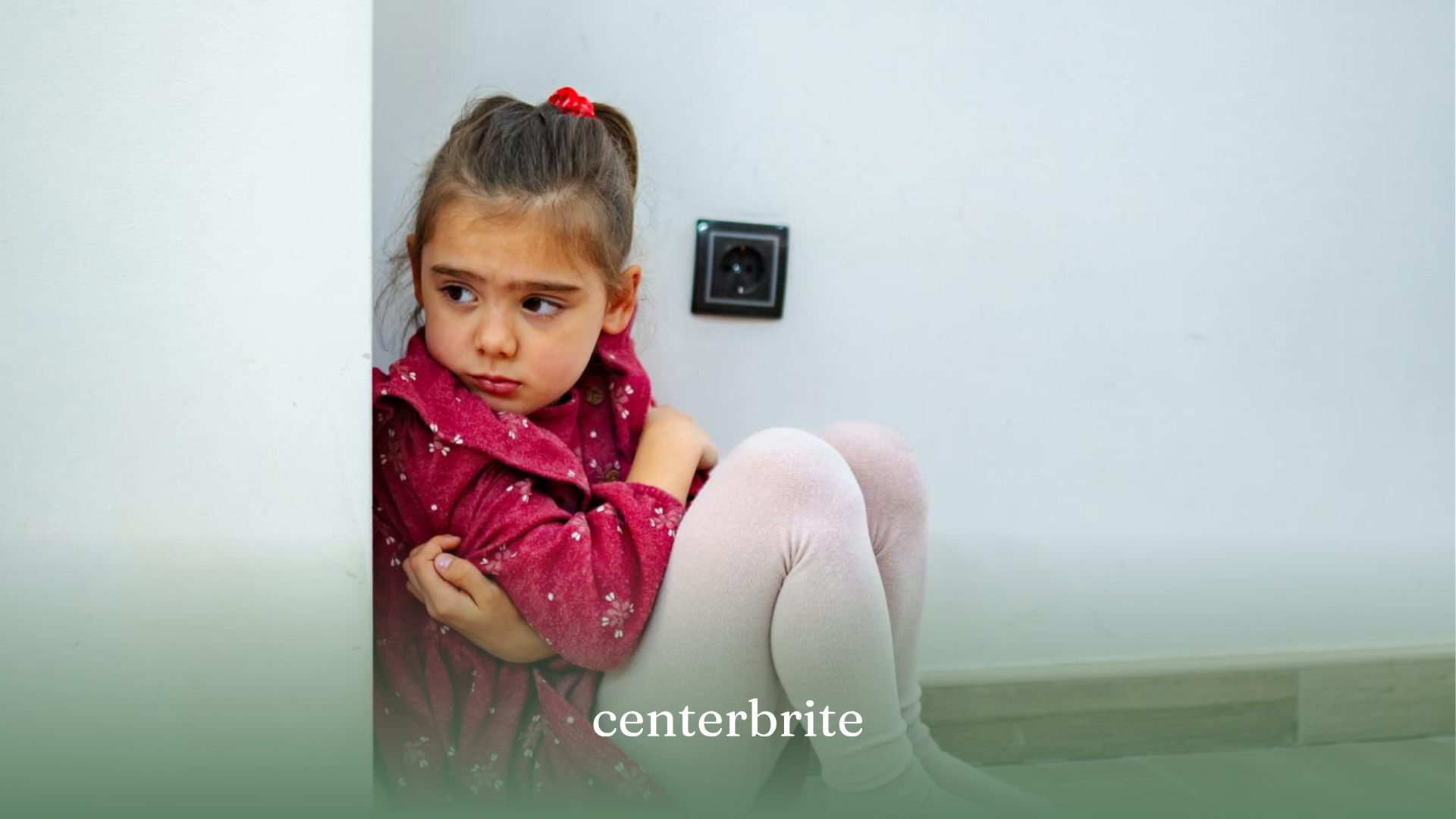
The short version. An autistic shutdown and dissociation can look almost identical from across the room. A child goes quiet, stares, stops answering, and seems far away. Underneath, they are not the same thing. A shutdown is a protective response to overload that many autistic people describe, and it usually has a visible trigger and a recovery pattern. Dissociation is a disconnection from yourself or your surroundings, often tied to stress or frightening experiences, and it belongs in the hands of a mental health professional. The two can overlap, and one child can experience both. You do not have to sort it out alone. You need careful observation, calm support in the moment, and the right professional when something does not fit.
- Shutdown: an overload response, often with a clear trigger, that eases with quiet and time.
- Dissociation: a feeling of being cut off from yourself or the world, often tied to stress.
- The overlap: staring, silence, and unresponsiveness can appear in both.
- The clues: what came before, how your child comes back, and what they say afterward.
- At home: lower the demands, reduce the input, and wait without pressure.
- Getting help: reach out when episodes feel unreachable or follow reminders of scary events.
Why These Two Get Mixed Up
Parents describe these moments in the same words. "He checked out." "She stared right through me." "It was like nobody was home." When a child goes still and silent, all you can see is the outside, and the outside of a shutdown and the outside of dissociation can match almost perfectly.
The confusion has real consequences. Treat a shutdown like defiance, and you may push a child who is already overloaded. Treat dissociation like a sensory issue, and you may miss a child who needs mental health care. Learning the difference helps you respond to what is actually happening, and it helps you describe it clearly to your pediatrician or therapist.
What an Autistic Shutdown Is
An autistic shutdown is an involuntary retreat from the world when sensory, emotional, or mental demands pile up past what a child can handle. Common triggers include sensory overload from sound, light, textures, or smells, the strain of masking, routine changes, poor sleep, and cognitive overwhelm. This guide for allies explains them well. Unlike a meltdown, which is loud and outward, a shutdown is quiet and inward. A child may go silent, stop moving, lose speech, or become very tired, and it can last longer than a meltdown.
What matters most is how autistic people describe it. In a recent study of accounts from 86 autistic adults, participants used metaphors like being frozen, a computer crash, going inside myself, and survival mode, and many linked shutdowns to protecting themselves from perceived threat. Researchers in Toronto also interviewed eight autistic children and youth ages 8 to 18. One described a shutdown as feeling like "my blanket weighs 500 pounds." The young people said what helped most was compassion and collaboration from trusted adults, not being told to simply walk away.
What Dissociation Is
The DSM-5 describes dissociation as a disruption in the way consciousness, memory, and identity normally fit together. In everyday terms, the mind steps back from the experience. Two forms come up often. Depersonalization is feeling detached from yourself, like watching your own body from outside. Derealization is feeling that the world is unreal, like watching a movie or looking through fog. A university open textbook lays out both clearly.
Dissociation exists on a spectrum. Mild versions, like zoning out in a daydream, are part of ordinary life. It becomes a concern when it is persistent and interferes with daily functioning. It is often connected to stress or frightening experiences. In a study of 59 autistic adolescents, 12.5% scored above the screening threshold for a dissociative disorder, and higher scores were linked to higher childhood trauma scores and older age. The authors called for larger studies and better measurement tools, and a screening score is not a diagnosis.
Autism Shutdown vs. Dissociation: Side by Side
This table is a guide for observation, not a diagnostic tool.
| Autistic shutdown | Dissociation | |
|---|---|---|
| Usual trigger | Sensory, emotional, or mental overload, masking, or a disrupted routine | Intense stress, or reminders of frightening experiences, though the trigger is not always clear |
| What your child may say | "Too much." "I couldn't talk." "I felt frozen." | "I felt far away." "It didn't feel real." "Like watching a movie." |
| What you may see | Quiet, still, withdrawn, tired, sometimes unable to speak | Blank stare, seeming "not there," slow to respond, gaps in memory |
| Response to quiet and low demands | Often eases gradually with space and time | May ease less predictably, or return around reminders of the stressor |
| Who helps sort it out | Family, BCBA, occupational therapist, pediatrician | Licensed psychologist or psychiatrist, with your pediatrician |
Where the Two Overlap
Real life is messier than a table. Some autistic people describe a shutdown as "going inside myself," which can sound a lot like feeling detached. Training materials from a leading dissociation society note that dissociative symptoms in autistic people can overlap with autistic experiences, and that screening matters because the symptoms can be overlooked. A child may also have both.
Staring spells and sudden unresponsiveness can have medical causes too, including seizures, so a pediatrician should be part of the picture. Only a qualified clinician can tell these apart. What you can do is gather clear observations, and that is where families make the biggest difference.
Three Clues You Can Collect at Home
You do not need clinical training to gather useful information. Three questions do most of the work.
- What came before? A shutdown usually leaves a trail: noise, crowds, a long day, hunger, or a sudden change. If you can see the trail, overload is a strong possibility. If nothing obvious came before, or the trigger seems to be a reminder of something frightening, write that down too.
- How does your child come back? After a shutdown, many children recover gradually with quiet, food, and time, and then return to their usual selves. If your child seems confused about where they were, cannot recall a stretch of time, or the return feels abrupt and unexplained, mention it to a clinician.
- What do they say afterward? Listen for their own words, like "too loud," "I was frozen," or "it felt like a dream." Children with limited speech can show you with pictures, a feelings chart, or a body diagram, and your therapist can help build those tools.
What We've Seen in Our Sessions
Here is a pattern we see often. We worked with an eight-year-old I will call Eli (his name and details are changed for privacy). His parents described "spells" in which he went silent, stared, and lay on the floor, usually in the evening. They feared he was ignoring them, or that something deeper was wrong.
His therapist began by simply recording what happened before and after each episode. Within a few weeks, a pattern appeared. Episodes followed a crowded, noisy afternoon, a long stretch of back-to-back demands, and little food or downtime. Nothing about them looked random. The team made small changes: a quiet corner, a predictable after-school routine, shorter work blocks, and a picture card Eli could hand over to say "I need quiet." Within a couple of months, Eli was using the card before he reached the freeze point, and the episodes became rare.
We also remember a different child whose episodes did not follow that pattern. They came without a clear sensory trigger, and the child described feeling "far away." That is when we encouraged the family to see a psychologist. Knowing when something falls outside our role is part of doing this well.
What to Do in the Moment, and After
When your child is in a shutdown, the goal is less input and less pressure.
- Lower the sensory load. Dim the lights, reduce noise, and move to a quieter space.
- Lower the demands. Skip questions and "use your words." Language may be unavailable right now.
- Stay near and stay calm. Short, soft phrases like "I'm here" are plenty.
- Offer one small, easy choice only when your child seems ready, such as water or a blanket.
- Wait. Recovery takes the time it takes.
Afterward, avoid interrogating. Offer food and water, and let your child return to activity gently. Later, when everyone is calm, review what happened with pictures or simple words, and write down the time, place, what came before, and sleep and hunger. These notes are gold for your care team. Then teach a way to ask for a break, like a card, gesture, or device, so your child can signal before overload peaks.
When to Ask for an Evaluation
Reach out to your pediatrician, and ask about a psychologist or psychiatrist with autism experience, if you notice:
- Episodes where your child seems unreachable for long periods even with calm support
- Episodes that follow reminders of frightening events
- Gaps in memory for stretches of time
- Your child saying they feel unreal, outside their body, or like the world is a movie
- Sudden changes in sleep, appetite, or mood
If your child talks about hurting themselves, call or text 988 or your local emergency number right away. If your child cannot be roused or you suspect a medical emergency, call emergency services.
Bring your notes to the appointment: dates, times, likely triggers, how long each episode lasted, and how your child recovered. Specific, ordinary details like these help a clinician see the pattern faster, and they spare you from trying to remember everything on the spot.
Where ABA Fits
ABA does not diagnose dissociation or treat trauma, and that is a job for mental health professionals. What a good ABA team can do is look closely at what happens before and after episodes, teach communication and coping skills, and coach you to carry them into daily life. It can also work alongside your child's other providers. An assent-based approach matters here, because when a child turns away, puts down materials, or shows discomfort, the therapist stops and reconnects.
Understanding Your Child, One Episode at a Time
Telling an autistic shutdown from dissociation comes down to patient observation, calm support, and the right professionals when a pattern does not fit. At Centerbrite, we provide in-home ABA therapy for autistic children, with parent coaching built in, so you learn to spot triggers, teach break-asking skills, and respond with confidence at home. We proudly serve families in New Jersey, across Bergen, Essex, and Morris counties. If these episodes are leaving your family worried, contact us today to get started. We would be glad to help you understand what your child needs.
Frequently Asked Questions
1. Is an autistic shutdown the same as dissociation?
No. A shutdown is an overload response, while dissociation is a disconnection from yourself or your surroundings. They can look alike and can occur together, so a professional evaluation helps when you are unsure.
2. What is the difference between a shutdown and a meltdown?
Both can come from overload. A meltdown tends to be outward and loud, while a shutdown tends to be quiet and inward.
3. Can my child have both?
Yes, it is possible. If you notice signs of dissociation, such as feeling unreal or memory gaps, ask your pediatrician about an evaluation.
4. Should I try to snap my child out of a shutdown?
No. Pressure usually adds to the overload. Reduce input, lower demands, and stay calm and close. Let your child come back at their own pace, and offer comfort only in ways they already welcome.
5. Can ABA therapy help with shutdowns?
It can help identify triggers and teach communication and coping skills, alongside other professionals. It is not a treatment for dissociation or trauma. See our FAQ page for how it works.
Sources:
- https://reframingautism.org.au/?p=3947
- https://journals.sagepub.com/doi/abs/10.1089/aut.2024.0193
- https://pmc.ncbi.nlm.nih.gov/articles/PMC8595127/
- https://openbooks.library.baylor.edu/understandingpsychdisorders/chapter/understanding-dissociation/
- https://link.springer.com/article/10.1007/s10803-024-06374-7
- https://cfas.isst-d.org/node/9100