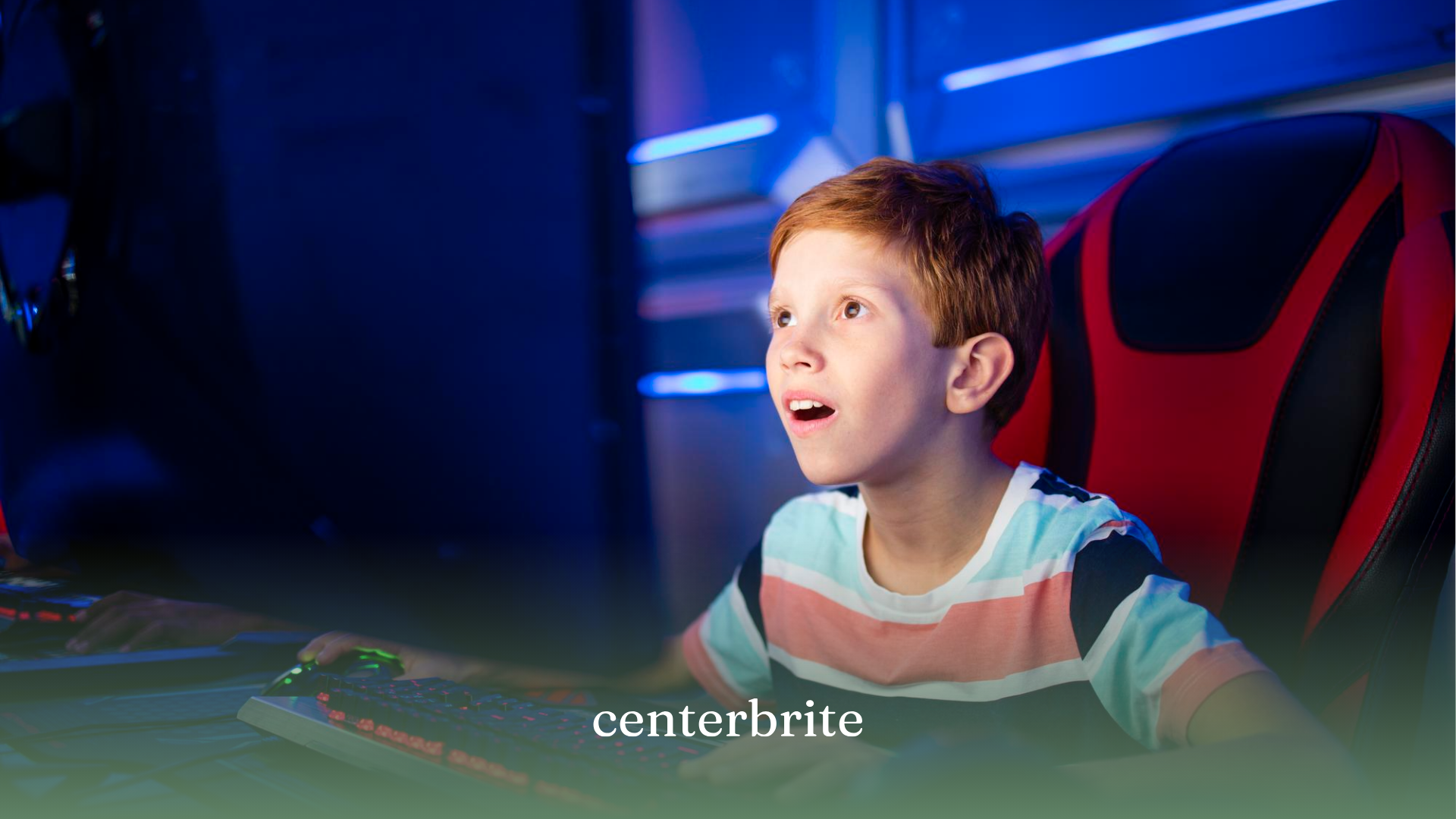
It is 7:40 on a school night, and your son has not looked up from the screen in an hour. He is building a castle, block by block, with a moat he has redesigned three times. When you say it is time for dinner, the whole evening unravels. You feel two things at once: worry that he is lost in a game, and a flicker of wonder, because this is the same child who struggles to tell you about his day, yet he can explain redstone circuits for twenty minutes without stopping.
If that picture feels familiar, you are not alone, and you are not doing anything wrong. I hear versions of this story from parents constantly, and the question underneath is almost always the same: is Minecraft good for my autistic child, or should I be limiting it?
The honest answer sits somewhere in the middle, and it is more hopeful than most people expect.
In this post:
- Why the game feels so comfortable to so many autistic kids
- What researchers have found, and what they have not
- Everyday skills a block-building world can help practice
- What this kind of play looks like inside a therapy session
- Simple ways to join your child in their world at home
- How to handle online safety, screen time, and hard transitions
Why Minecraft Feels So Good to Many Autistic Kids
Minecraft is a sandbox game. There is no fixed storyline, no timer pushing you forward, and no single right way to play. You collect blocks, craft tools, and build whatever you can imagine. For a child who finds the real world loud, fast, and unpredictable, that freedom comes with a surprising amount of order.
Researcher Kathryn Ringland spent years studying Autcraft, an online Minecraft community built for autistic players and their families. In writing about it, she described four things the game offers: structure, a safe social space, ways to filter the experience, and room for imagination. Each of those matches what I hear from families.
- Predictable rules. Gravity works the same way every time. A crafting recipe never changes its mind. A child who is exhausted by social rules that shift from one moment to the next can rest inside a system that behaves consistently.
- Control over the experience. Kids can choose a peaceful mode with no monsters, mute chat, pause, or retreat to a private world. Few playgrounds let a child turn down the volume that easily.
- A place for deep interests. Many autistic children have intense, focused interests, and those interests are real strengths. Minecraft rewards exactly that kind of depth, from architecture to engineering to storytelling.
- Different ways to be social. Standing next to a friend while you both build is social. Typing a message instead of speaking is social. Sharing a creation is social. The game lets a child join in without the pressure of eye contact or instant verbal replies.
What the Research Actually Says
Interest in this question has grown alongside autism identification. The CDC reports that about 1 in 31 eight-year-olds were identified with autism in 2022, based on data from 16 communities across the country. More families are asking how everyday activities, including video games, fit into their child's development.
Here is what the research shows so far.
In a 2016 study, Ringland and her colleagues observed the Autcraft community over time. They found that members searched for, practiced, and redefined what being social means through many communication channels. The takeaway is a gentle one: a child who looks "less social" face to face may be very social in a setting that fits how they communicate.
A small pilot from the University of Adelaide in Australia looked at Minecraft as a tool for building social collaboration. Eleven children aged 10 to 12 played in small groups. Early reports described parents and children noticing better social skills and wider friendship networks, along with kids who were eager to keep playing after the sessions ended.
I want to be just as clear about the limits. When the researchers later published the peer-reviewed results, the improvements in social skills were not statistically significant, and parent and child reports of peer competence were mixed. The authors themselves urged cautious interpretation. The sample was tiny, and the work was a pilot.
So here is my honest summary. Minecraft is not a treatment, and no game will teach your child social skills on its own. What it can be is a motivating, low-pressure setting where skills get practiced, especially when a thoughtful adult is part of the play.
Skills Minecraft Can Help Practice
When a child is truly enjoying something, learning stops feeling like work. That is why skilled clinicians pay such close attention to a child's favorite activities. Here is how common moments in the game connect to skills families care about.
| What happens in the game | Skill it can practice | How an adult can build on it |
|---|---|---|
| Building a house together | Turn-taking, sharing space, negotiating | Agree on roles first: "You do the roof, I'll gather wood" |
| Asking a friend for a tool or block | Requesting and clear communication | Pause and wait, then model "Can I have the iron?" |
| A creeper blows up part of a wall | Flexibility and coping with surprise | Narrate a calm response and rebuild together |
| Following a crafting recipe | Sequencing and multi-step directions | Write the steps on paper and check them off |
| Chatting with a teammate | Conversation, reading and replying | Practice greetings and one follow-up question |
| Leading a group build | Leadership and perspective-taking | Ask, "What does your teammate need right now?" |
Notice that in every row, the game supplies the motivation and the adult supplies the gentle guidance. That pairing is where the real growth tends to happen.
What We've Seen in Our Sessions
Families sometimes ask whether a video game can really belong in therapy. Here is an example that shows how it can work.
We worked with a seven-year-old I will call Leo (his name and details are changed for privacy). Leo loved Minecraft but played mostly alone. At home, he used one or two words to ask for things, and when a sibling touched his builds, he would shout or leave the room.
His therapist did not start with a lesson. She started by sitting beside him and asking him to show her his world. For the first few sessions, her only job was to be a welcome guest. Once Leo was relaxed, she began building a small shared project with him, and she created tiny, friendly opportunities to practice. She would "need" a block he was holding, then wait. When he handed it over, she thanked him warmly. Later she added a gentle surprise, a wall that had to be rebuilt, and showed him how to take a breath and say, "Oops, let's fix it."
Over several weeks, Leo moved from grabbing to asking, "Can I have the diamonds?" He tolerated changes to a build with far less distress. What mattered most is what came next: he began using the same phrases with his sister at the kitchen table, over a pile of LEGO bricks. Skills that travel from the screen to real life are the true goal, and we plan for that from the first day.
This is the heart of our play-based, assent-based approach. The child leads, the interest becomes the doorway, prompts are faded over time, and the child is always free to say "stop." Progress is tracked so that we know what is working rather than guessing.
How to Play Minecraft With Your Child at Home
You do not need to be good at the game, and you do not need a plan. You only need to be curious. Here is a simple way to start.
- Ask to be shown. Say, "Will you give me a tour?" Letting your child be the expert builds confidence and connection at the same time.
- Narrate what you see. Describe their work out loud: "You put the torches on both sides. That makes it feel safe." This models language without quizzing them.
- Pick a shared goal. Build a village, a zoo, or a bridge together. A shared goal naturally creates turn-taking and requesting.
- Leave small gaps. Keep a block or a tool just out of reach so that your child has a reason to ask. Wait patiently and celebrate any attempt, spoken, typed, or pointed.
- Practice small surprises. When something breaks, respond calmly and show a simple repair routine. Your steady voice teaches more than any explanation.
- Bridge to the real world. Recreate the same skill offline with LEGO, drawing, cooking steps, or a family project, so that it does not stay trapped inside one game.
Keeping It Safe and Balanced
A child's passion deserves respect, and it also deserves a few guardrails.
Online Safety
The Autcraft server was started in 2013 by a father named Stuart Duncan because autistic children playing on open servers were being bullied. That history is a useful reminder. Choose private worlds or family servers, review chat settings together, and keep the computer in a shared space. Teach your child that they can always tell you about anything that feels strange or unkind, and that they will never be in trouble for telling.
Screen Time and Transitions
Stopping a game mid-build can feel like having a tower knocked over. Use a visual timer, give a "last build" warning, and offer a predictable next step, such as a favorite snack or a short walk. Letting a child save their world before stopping often helps.
Hyperfocus Is Not Automatically a Problem
Deep focus is part of how many autistic people learn and thrive. The concern is when gaming consistently replaces sleep, meals, school, or every other source of connection, or when distress after stopping is intense and lasts.
Know When to Ask for More Support
If your child is not communicating wants and needs, if transitions are overwhelming for the whole family, or if the game is the only place your child connects, a professional can help. You do not have to figure this out by yourself.
Turning Your Child's Favorite World Into Real Progress
Your child's love of Minecraft is not a problem to solve. It is a doorway. With the right support, the same curiosity that builds a castle can build conversation, flexibility, and friendship.
At Centerbrite, we help autistic children grow through in-home ABA therapy that begins with what they already love. Our clinicians use play, follow your child's lead, and teach you to carry skills into everyday life through parent coaching. We proudly serve families in New Jersey, across Bergen, Essex, and Morris counties. If you would like to talk about what support could look like for your child, contact us today to get started. We would love to meet your family.
Frequently Asked Questions
1. Is Minecraft good for autistic children?
For many children, it can be a positive, motivating activity that offers structure, creativity, and flexible ways to connect. It works best with healthy limits and an adult who plays along. It is a tool, not a treatment.
2. Can Minecraft replace social skills therapy?
No. Research on game-based programs is still early and small. The game can make practice more fun, but a trained clinician is what turns play into lasting skills. Our FAQ page explains how ABA therapy works in more detail.
3. How much Minecraft is too much?
There is no single magic number. Look at the whole picture: Is your child sleeping, eating, attending school, and connecting with family? Is stopping manageable with support? If the answer to those questions is no, it is time to adjust routines or talk with a professional.
4. Is it safe for my child to play Minecraft online?
It can be, with preparation. Use private or family servers, turn on chat restrictions, play in a shared space, and keep an open conversation about what your child sees online.
Sources:
- https://www.cdc.gov/ncbddd/autism/materials/addm-factsheet.html
- https://www.theconversation.com/how-a-minecraft-world-has-built-a-safe-online-playground-for-autistic-kids-124492
- https://doi.org/10.1145/2858036.2858038
- https://adelaide.edu.au/newsroom/news/list/2024/05/13/autistic-children-the-real-winners-from-online-gaming
- https://researchnow.flinders.edu.au/en/publications/enhancing-social-collaboration-in-autistic-pre-teens-through-mine/