A parent asked me something recently that I think about a lot: "Why do you keep helping him so much during the puzzle? Won't that just make him depend on you forever?"
It's a completely fair question, and honestly one of the most important ones a parent can ask about ABA therapy. The short answer is that the kind of help you were watching has a name; it's called prompting, and when it's done well, it's built specifically to disappear over time, not to become a permanent crutch. The word "positive" in front of it isn't a vague feel-good label either. It refers to something concrete: giving a child enough support to succeed the first time, rather than letting them fail and correcting them afterward.
That distinction matters more than it might sound like at first, and it's worth walking through in detail.
What Is Positive Prompting in ABA Therapy?
Positive prompting in ABA therapy means giving a child just enough support, physical, verbal, gestural, or visual, to help them respond correctly the first time a new skill is taught, rather than letting them guess, get it wrong, and correct the mistake afterward. That support is then deliberately and systematically reduced, a process called prompt fading, so the child ends up performing the skill entirely on their own. Prompting is one of the most heavily researched teaching strategies in the field, and its entire design is oriented around building independence, not creating reliance on help.
What Makes a Prompt "Positive"
Every prompt is, at its core, a form of help delivered before a child responds, not a correction delivered after. That timing is the whole point. A therapist who prompts a child through the first few attempts at a new skill is deliberately preventing the child from practicing mistakes, since a skill practiced incorrectly tends to get harder to unlearn the longer it goes uncorrected.
This approach is often described in the field as errorless learning, and it works alongside reinforcement rather than instead of it. When a child responds correctly, whether independently or with a prompt's help, that response is immediately paired with genuine reinforcement, praise, access to a preferred item, or a favorite activity. Over dozens of repetitions, the child isn't just learning the mechanical steps of a skill; they're learning that attempting it goes well, which matters enormously for a child who has a history of frustration around a specific task.
This is also why prompting is never used in isolation. It's woven into the broader structure of a therapy session, where a child's specific motivators, current skill level, and history with a task all shape exactly how much support they get on any given day. The same skill might call for a full physical prompt on a hard morning, and only a light gesture on an easy one, and a good program is built to flex with that rather than apply a rigid script regardless of how the child is actually doing.
The Types of Prompts, from Most to Least Supportive
Prompts exist on a spectrum, and a BCBA chooses where to start based on how much support a specific child actually needs for a specific skill, never more and never less than necessary.
| Prompt Type | What It Looks Like | Example |
|---|---|---|
| Physical | Hands-on guidance, full or partial | Hand-over-hand assistance to help a child zip a jacket |
| Model | Demonstrating the skill for the child to imitate | Showing a child how to wash hands before asking them to try |
| Gestural | A movement that hints at the correct response | Pointing to the soap dispenser during handwashing |
| Verbal | A spoken cue, ranging from a full instruction to a subtle hint | "Wash your hands" versus "What do we do before dinner?" |
| Visual | A picture, icon, or written cue | A photo sequence showing each handwashing step |
| Independent | No prompt at all | The child completes the skill entirely on their own |
Most teaching sequences move from the top of this table toward the bottom over time, though the starting point and the pace of that movement look different for every child and every skill.
How BCBAs Decide Which Prompting Strategy to Use
Choosing a prompt type is only half the picture. A BCBA also selects a prompting procedure, meaning the specific system for delivering and fading prompts over an entire teaching sequence.
- Least-to-most prompting starts by giving a child the chance to respond independently first, then adds progressively more support only if needed, moving up through gestural, verbal, and physical prompts until the response is correct. This procedure tends to fit skills a child already shows inconsistently.
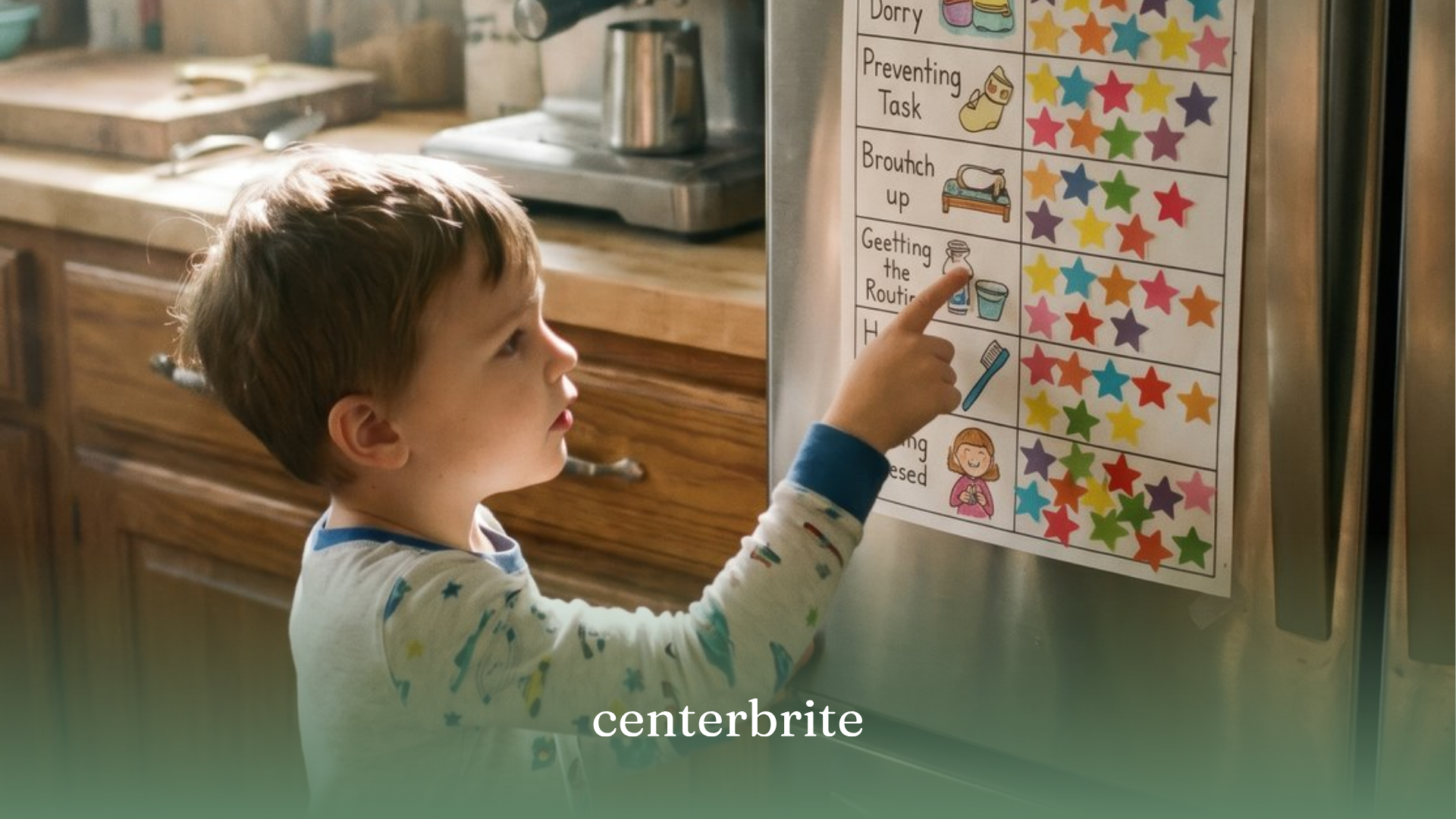
- Graduated guidance works in the opposite direction for a specific kind of skill: chained tasks with several physical steps, like getting dressed or brushing teeth. A therapist provides a controlling level of physical support at first, then continuously and immediately reduces that support the moment the child starts managing a step alone, ready to reinstate it just as quickly if the child struggles.
- Simultaneous prompting delivers the correct response at the same moment as the instruction, with no delay and no chance to guess wrong, then periodically checks progress in separate, prompt-free probe sessions. This procedure is often used when introducing a brand-new skill for the very first time.
The UNC Frank Porter Graham Child Development Institute's evidence-based practice review identified 133 single-case design studies and 7 group design studies supporting prompting as a genuine evidence-based practice, effective from early intervention through young adulthood, across academic, communication, social, behavioral, and daily living outcomes. Autism New Jersey's evidence review places prompting directly in its highest evidence tier for skill-building interventions as well.
The Research Behind Errorless Learning Is Genuinely Nuanced
It's worth being honest here rather than overselling things. A 2026 systematic review and meta-analysis published in Frontiers in Psychology looked specifically at errorless learning approaches (the broader family of strategies positive prompting belongs to) across children, young adults, and older adults, including several studies involving autistic children directly.
The findings weren't a blanket win across every measure. Overall task performance didn't show a significant advantage for errorless approaches once all age groups were combined. But for movement accuracy specifically, and specifically among children and among learners with disabilities, the review found a meaningful, statistically significant benefit. That's a genuinely useful finding, not because it proves prompting works miracles, but because it shows exactly where the strongest evidence actually points: toward the populations and outcomes most relevant to a child in ABA therapy, rather than toward a universal claim that would be too good to be fully true.
What This Looks Like in a Real Session
In our sessions, we worked with a boy we'll call Owen, six years old, who had been trying and failing to zip his own jacket for months, usually ending in tears and a parent stepping in to finish it for him.
His RBT started with a full physical prompt, hand-over-hand through the entire zipping motion, paired with enthusiastic praise the moment the zipper reached the top. After several sessions of consistent success, the physical prompt dropped to just a light touch guiding his hand toward the zipper pull. A few weeks later, that touch faded to a gestural prompt, a simple point at the zipper. By the sixth week, Owen was zipping his own jacket after nothing more than his RBT saying, "Ready for your coat?"
Owen isn't one specific child. He's a composite drawn from a pattern we see constantly: the fading isn't an afterthought tacked onto prompting; it's the entire point of using it in the first place.
The Real Risk Isn't Prompting, It's Failing to Fade It
Here's the honest answer to that parent's original question. Prompting itself doesn't create dependency. Prompting that never gets faded does. The two look identical in a single session, which is exactly why it can be hard for a parent watching from the sidelines to tell the difference between support that's working as intended and support that's stalled out.
This is part of why ongoing data collection matters so much in a well-run program: a BCBA is tracking, session by session, exactly how much prompting a specific skill still requires, specifically so that support gets reduced the moment a child is ready rather than a moment later. If you ever want to check in on this directly, asking your BCBA where a specific skill currently sits on the prompting hierarchy is a completely reasonable and useful question to bring to a parent meeting.
If your child's therapy has ever looked like a lot of hands-on help and you've wondered whether that help is going anywhere, hopefully this makes the logic behind it a little clearer. Good prompting is built to work itself out of a job. That's a core part of how we design every program at Centerbrite. Our BCBAs and therapists build individualized, data-driven prompting and fading plans into every child's ABA therapy, for families across Bergen, Essex, and Morris counties in New Jersey. If you'd like a clearer picture of how this could look for your own child, we'd love to talk. Get started today and let's build a plan that moves your child toward real independence.
Frequently Asked Questions
1. Does using prompts mean my child isn't really learning the skill on their own?
No. Prompting is specifically designed as a temporary bridge, not a permanent substitute for independent skill use. The fading process is built into the strategy from the very first session, not added on later as an afterthought.
2. How long does it usually take to fade a prompt completely?
It varies enormously depending on the skill and the child, from a few sessions for a simple discrete skill to many weeks for a complex chained task like a full morning routine. Data collected session by session is what actually determines the pace, not a fixed timeline.
3. What's the difference between positive prompting and just correcting my child when they get something wrong?
Positive prompting happens before a response, helping a child succeed the first time. Correction happens after a mistake has already occurred. Errorless approaches favor the former specifically because a mistake practiced repeatedly can be harder to unlearn than it was to prevent in the first place.
4. Can prompting be used for behaviors, not just skills like dressing or communication?
Yes. Prompting is used across a wide range of goals, including social behaviors like greeting a peer, communication skills like requesting a break, and daily living routines like handwashing or getting dressed.
5. Is one type of prompt, like physical or verbal, always better than the others?
No single prompt type is universally best. The right choice depends on the specific skill, the child's current ability level, and what actually helps that particular child succeed, which is exactly why this decision is individualized by a BCBA rather than applied the same way to every learner.
Sources:
- https://afirm.fpg.unc.edu/wp-content/uploads/Prompting-Brief-Packet-Sam-AFIRM-Team-Updated-2024.pdf
- https://autismnj.org/about-autism/treatment/
- https://asdnetwork.unl.edu/virtual-strategies/prompting/
- https://docs.autismspeaks.org/evidence-based-practices/prompting