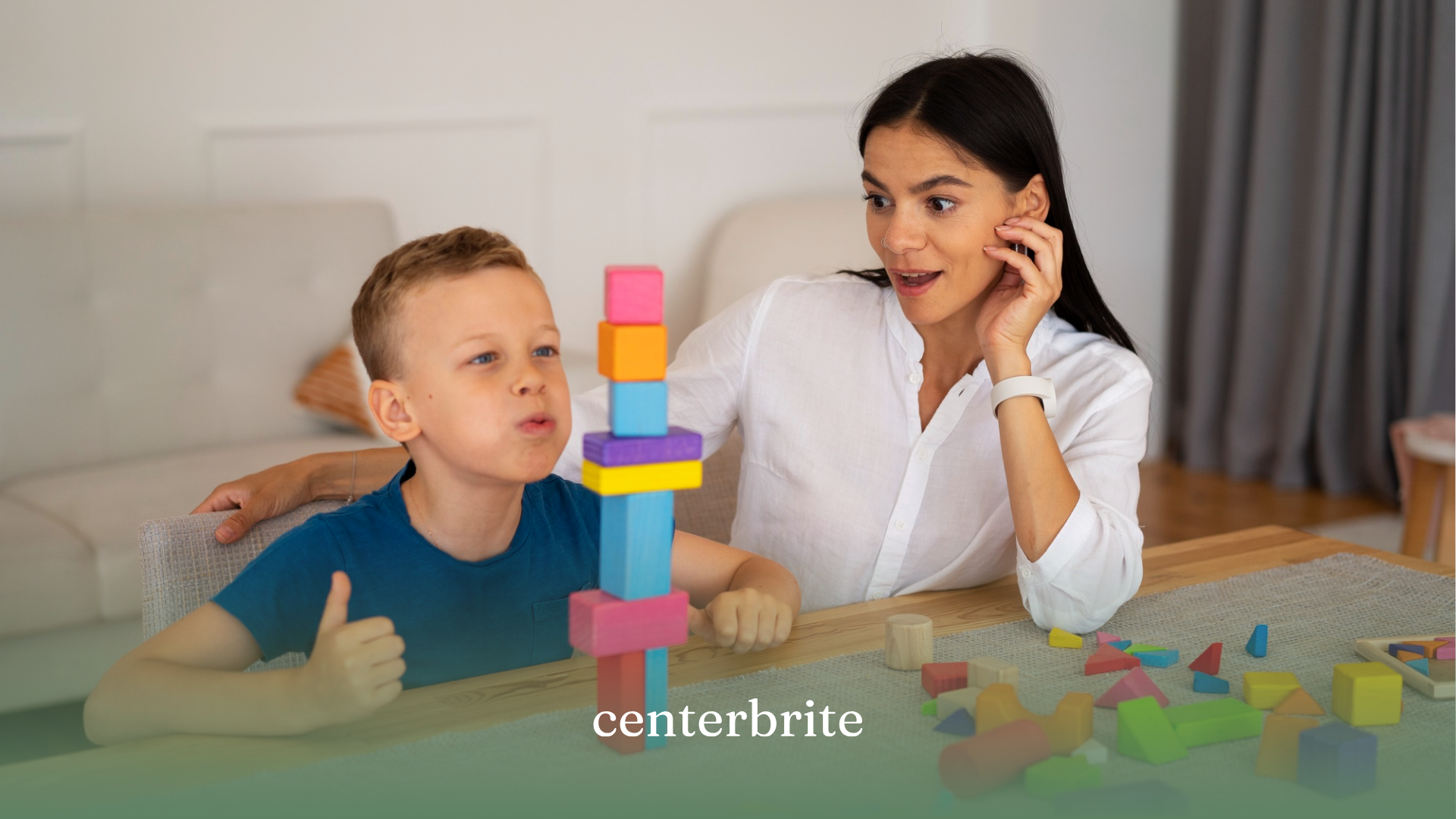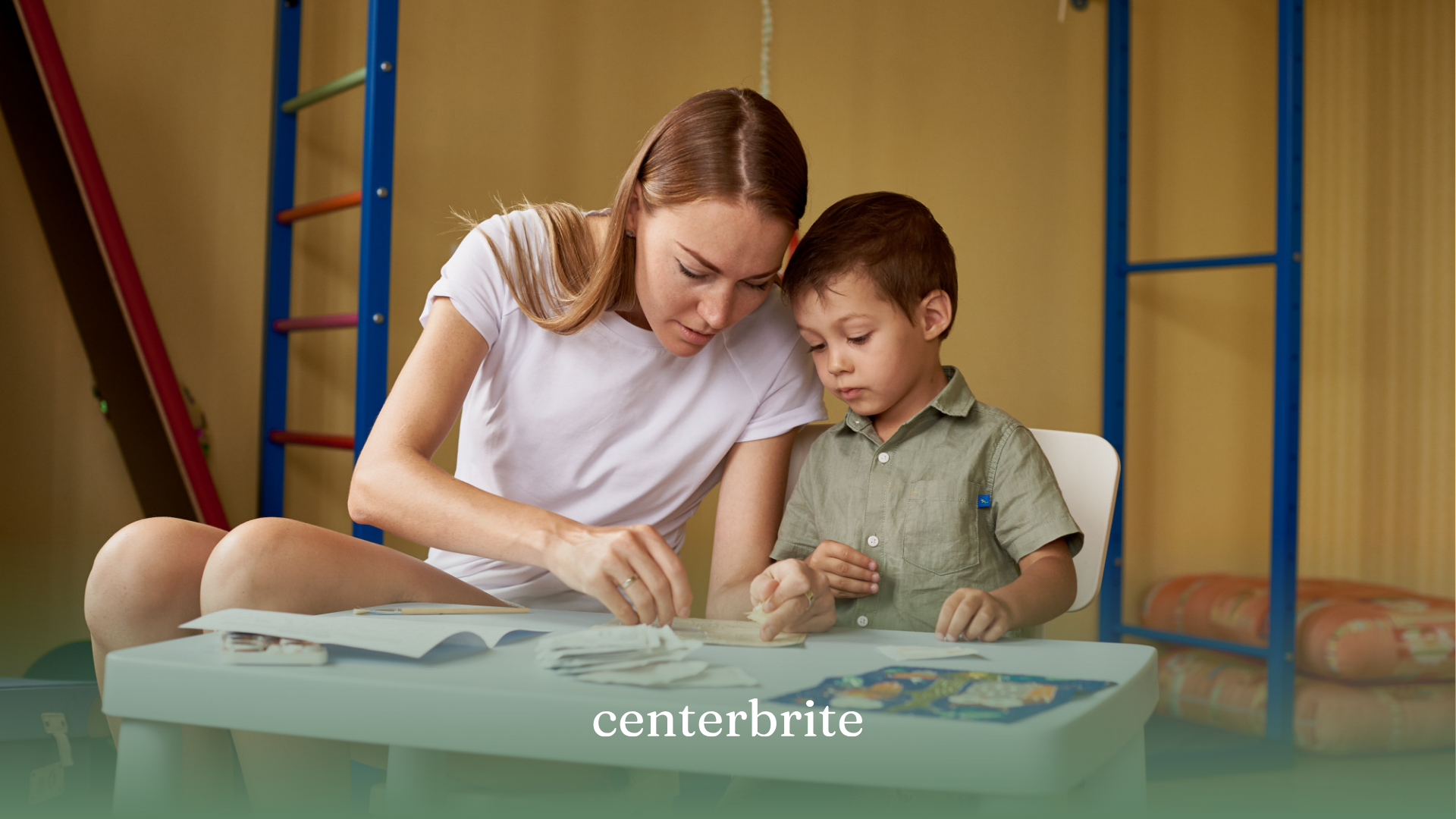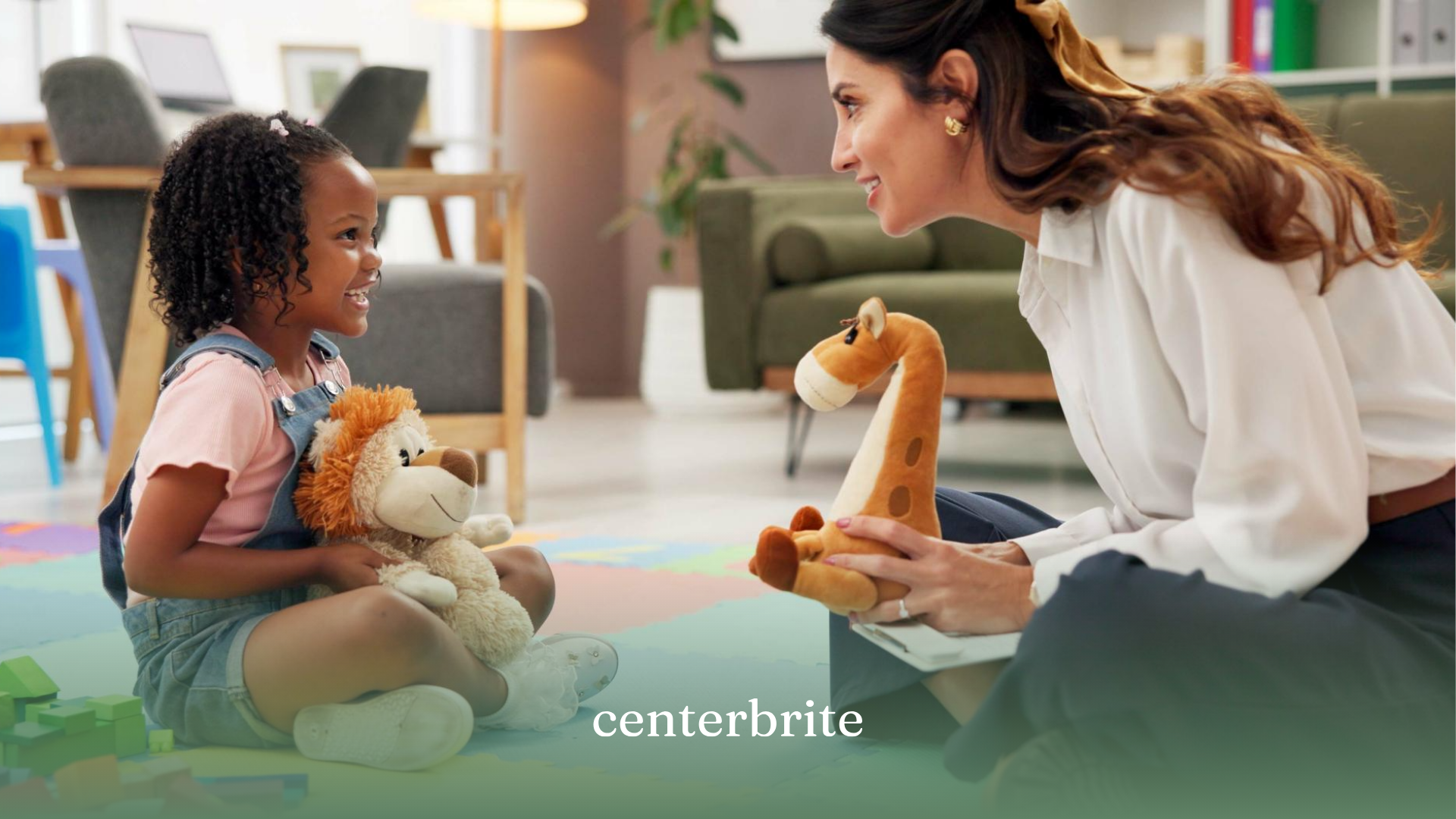
"I don't want to sound ungrateful, but when does the actual therapy start? They've been on the living room floor with a bin of dinosaurs for forty minutes."
I've heard some version of that question from a lot of parents in the first month of services, and it's a fair one. Most people picture early intervention as flashcards at a small table, a stack of data sheets, and a child repeating words on cue. Then a therapist shows up, sits on the rug, and plays. If you're paying for it, or going through the work of an insurance authorization for it, you want to know that something real is happening.
Something real is happening. It's just hidden inside the play, which is exactly where it belongs for a two- or three-year-old. Here's what your therapist is doing on that floor, why the research supports it, and how to tell skilled play-based teaching apart from someone simply keeping your child entertained.
Quick Answer: Why Is Early Intervention ABA Play-Based?
Because play is where young children naturally learn, and because skills taught inside a motivating activity tend to stick and transfer. In play-based early intervention ABA, the therapist follows your child's interests, then builds teaching moments into those interests: a request before the bubbles get opened, an imitation of a sound during a song, a turn taken with a toy car. The child stays motivated, the reward is built into the activity itself, and the skill gets practiced in the same setting where you'll need your child to use it.
The short version:
- Play-based teaching is a documented category of evidence-based practice, not a soft alternative to "real" ABA.
- The therapist follows your child's lead, but the goals, prompts, and data behind the session are planned.
- Motivation matters clinically, because a child who wants the next turn will work for it.
- Play itself is a skill worth teaching, and it feeds joint attention, imitation, and language.
- Research shows gains in communication, language, cognition, and play, with a realistic picture of what it does and doesn't change.
- Skilled play-based therapy looks relaxed and is highly structured underneath, and there are specific questions you can ask to check.
What the Therapist Is Actually Doing on the Floor
The strategies used in high-quality early intervention have a name in the research literature. In 2015, a group of leading autism researchers published a paper defining Naturalistic Developmental Behavioral Interventions (NDBIs), which they describe as interventions delivered in natural settings, with shared control between child and therapist, using natural rewards and a range of behavioral strategies to teach developmentally appropriate skills. The Early Start Denver Model, Pivotal Response Treatment, and JASPER all sit in this family, and most modern in-home ABA programs for toddlers borrow heavily from it.
Australia's Autism CRC, which reviews intervention evidence for families and clinicians, summarizes the thirteen common features these approaches share. A few of them explain exactly what you're watching when your child's therapist sits down with the dinosaur bin:
- Teaching still uses the antecedent, behavior, consequence sequence that all ABA rests on.
- Goals are individualized, and progress is measured continuously.
- Teaching episodes are child-initiated rather than adult-imposed.
- The environment is arranged in advance to create opportunities.
- Natural, built-in rewards are preferred over external ones.
- Adults model skills and imitate the child's actions and communication attempts.
- Turn-taking inside social and play routines is taught directly.
So the toys on the floor were chosen, not grabbed at random. The bin is slightly out of reach on purpose. The therapist is counting opportunities, not minutes.
Here's the same session from two angles.
| What you see | What the therapist is doing | Skill being taught |
|---|---|---|
| Bubbles get blown once, then the jar is closed and held still | Creating a natural moment where your child has a reason to communicate, then waiting | Requesting, eye contact, or using a sign, word, or picture |
| The therapist crashes a tower and laughs | Building a shared routine your child will want repeated | Joint attention and social referencing |
| The therapist pushes a car and says "go" each time | Modeling one word at the child's level, repeatedly, inside a preferred activity | Imitation and early expressive language |
| A second dinosaur appears and "eats" a block | Expanding play a single step beyond your child's current level | Symbolic and pretend play |
| The therapist hands over one puzzle piece at a time | Engineering turns without turning it into a drill | Waiting, turn-taking, requesting more |
| The song stops mid-verse, and the therapist waits | Pausing a predictable routine so your child fills the gap | Initiating, vocalizing, protesting appropriately |
Why Play, Specifically
Motivation is a clinical variable.
A child who is working for a sticker is working for something unrelated to the task. A child who is working to get the bubbles open again is working for the thing they actually want. The reward is immediate, the connection between "I asked" and "I got it" is obvious, and no one has to manufacture enthusiasm.
Skills learned in play travel better.
A word practiced only at a table often stays at that table. The same word practiced during ten different play routines, with different people and different toys, is far more likely to show up at Grandma's house. Teaching inside real routines is a core part of the play-based, assent-driven approach used in good early programs.
Play is a skill in its own right.
Many autistic toddlers play differently: lining up cars, spinning wheels, repeating one sequence. That isn't wrong, and the goal isn't to replace what your child enjoys. But research treats play and joint attention as building blocks for later development, including language, which is why they show up as direct targets rather than as a backdrop.
It protects your child's willingness to participate.
Therapy a child resists teaches avoidance alongside whatever else it teaches. Therapy a child enjoys keeps the door open, session after session.
What the Research Actually Shows
I want to give you the honest version here, not the marketing version.
Autism CRC's review of systematic reviews found that naturalistic developmental behavioral interventions showed positive effects on social communication, communication generally, expressive and receptive language, cognition, and play. The same review found null effects for overall autistic characteristics and for restricted and repetitive behaviors. Read that carefully, because it's actually the point: these approaches help children communicate, understand, and play more, and they do not "remove" autism. Any provider who promises you otherwise is selling something.
There's also good evidence this works outside research labs. UCLA researchers tested JASPER, a play-based model built around joint attention and symbolic play, in two community preschool programs in Harlem and the Bronx. As UCLA Health reported, 113 toddlers with an average age of 31 months took part, and teaching assistants at the centers were trained to deliver the intervention rather than university clinicians. After ten weeks, the children receiving 30 minutes a day of the play-based programming increased their use of one- and two-word expressions and spent more time interacting with others rather than playing alone. Connie Kasari, the study's senior author, described what an observer sees this way: it looks like a great play session, while the therapist is running many strategies underneath it.
That gap between what it looks like and what it is describes the whole approach.
Play-Based Does Not Mean Unstructured
This is where I'd push back on a common misunderstanding, including among some providers. Following a child's lead is a teaching strategy, not a lack of a plan. Underneath a good session there is a specific set of targets, a prompting hierarchy, a plan for fading those prompts, and data recorded while the play is happening.
The difference between skilled play-based teaching and an expensive playdate is visible if you know what to look for. In a strong session, the same routine repeats with small variations, because repetition is how learning happens. The therapist waits after creating an opportunity rather than filling every silence. Demands are woven in at a pace your child can tolerate, and when your child pulls away, the therapist backs off and rebuilds the connection instead of pushing through. And at the end, you get a clear answer to "what did you work on today?"
Four questions worth asking your BCBA:
- What are the three or four goals being targeted inside play right now?
- How do you record data without stopping the activity?
- How will we know when a skill has generalized beyond the therapist?
- What happens when my child loses interest in a toy we've been using?
What This Looks Like in Practice
The example below is a composite of several children we've worked with. Details have been changed, and it doesn't describe one specific child.
A newly diagnosed two-and-a-half-year-old had maybe five words he used reliably, and he used none of them to ask for anything. When he wanted juice, he cried at the refrigerator. His parents' main goal was simple and completely reasonable: they wanted him to be able to tell them what he needed.
His first sessions didn't look like language instruction. His therapist noticed he loved a wind-up frog, so she sat on the floor and wound it. Then she wound it again. Then she held it, wound it halfway, and waited. The first few times, he reached for her hand. She treated the reach as communication and gave him the frog, because responding to an early attempt is what makes a child try again.
Within a couple of weeks, the reach became an open palm held out. Then an "uh." Then, about six weeks in, "go." Not prompted, not at a table, just said while he watched her hands.
In our sessions, we've seen that first genuine request change the mood of an entire household. It isn't only the word. It's that the child learns communication works, which makes the next request easier to teach, then the next one. His parents also started using the same pause during bath time and at the fridge, which is where most of the real progress happens. Programs built for this age group usually treat communication, play, and adaptive skills as the core of the plan for exactly this reason, and you can see how that's structured in our early intervention program.
How to Join In Without Turning Playtime Into a Drill
You don't need clinical training to use the underlying ideas. A few that translate well to family life:
- Follow instead of redirect. Join whatever your child is already doing for a few minutes before you introduce anything of your own.
- Imitate your child. Copy the sound, the action, the way they're banging the spoon. Imitation from an adult often gets a child's attention faster than an instruction does.
- Pause a predictable routine. Stop mid-song, or midway through the peekaboo, and wait a few seconds. The gap is the invitation.
- Say one word more than your child uses. If your child says nothing, say "ball." If your child says "ball," say "big ball."
- Put good things in sight but out of reach. A closed container or a high shelf creates a natural reason to ask.
- Accept every attempt. A look, a reach, a sound, a point. Respond to it as communication, then gently model the next step up.
Play With a Plan Behind It
The forty minutes on the living room floor with the dinosaur bin is the therapy. Inside it sits a set of individualized goals, a therapist making dozens of small clinical decisions, and the kind of motivation you simply cannot manufacture at a table.
At Centerbrite, our BCBAs design play-based, assent-driven programs for young autistic children, deliver them in your home where your child's real routines happen, and coach parents so the same strategies keep working between sessions. We serve families across Bergen, Essex, and Morris counties in New Jersey, and we'd be glad to talk through what an early intervention plan could look like for your child. Contact us today to get started.
Frequently Asked Questions
1. Is play-based ABA less effective than structured table work?
No. They serve different purposes, and most programs use both. Structured teaching can be efficient for certain discrete skills, while naturalistic teaching in play tends to be stronger for motivation, spontaneous communication, and generalization. The mix should be based on your child's needs and reviewed as they progress.
2. How do therapists collect data if they're playing?
Usually with brief tallies or a coded sheet during natural breaks in the activity, or immediately after. If you're curious, ask your child's therapist to show you their sheet. It should map directly onto the goals in the treatment plan.
3. My child only plays in one repetitive way. Is that a problem?
It's not something to eliminate. A therapist will usually join that play first, then expand it by a single step, such as adding one new action to the sequence. Broadening a child's play repertoire opens more chances to learn, while the favorite routine stays available.
4. What age is play-based early intervention for?
It's most associated with toddlers and preschoolers, roughly ages two to four, when play is the child's main learning context. Naturalistic strategies continue to matter at older ages, though the activities change. Common questions about diagnosis, insurance, and getting started are covered on our FAQ page.
Sources:
- https://escholarship.org/uc/item/05n894kb
- https://www.autismcrc.com.au/interventions-evidence/category-overview/NDBI
- https://www.uclahealth.org/news/release/preschoolers-with-autism-show-gains-after-playbased-program
- https://www.autismspeaks.org/early-start-denver-model-esdm
- https://pubmed.ncbi.nlm.nih.gov/34348479/